
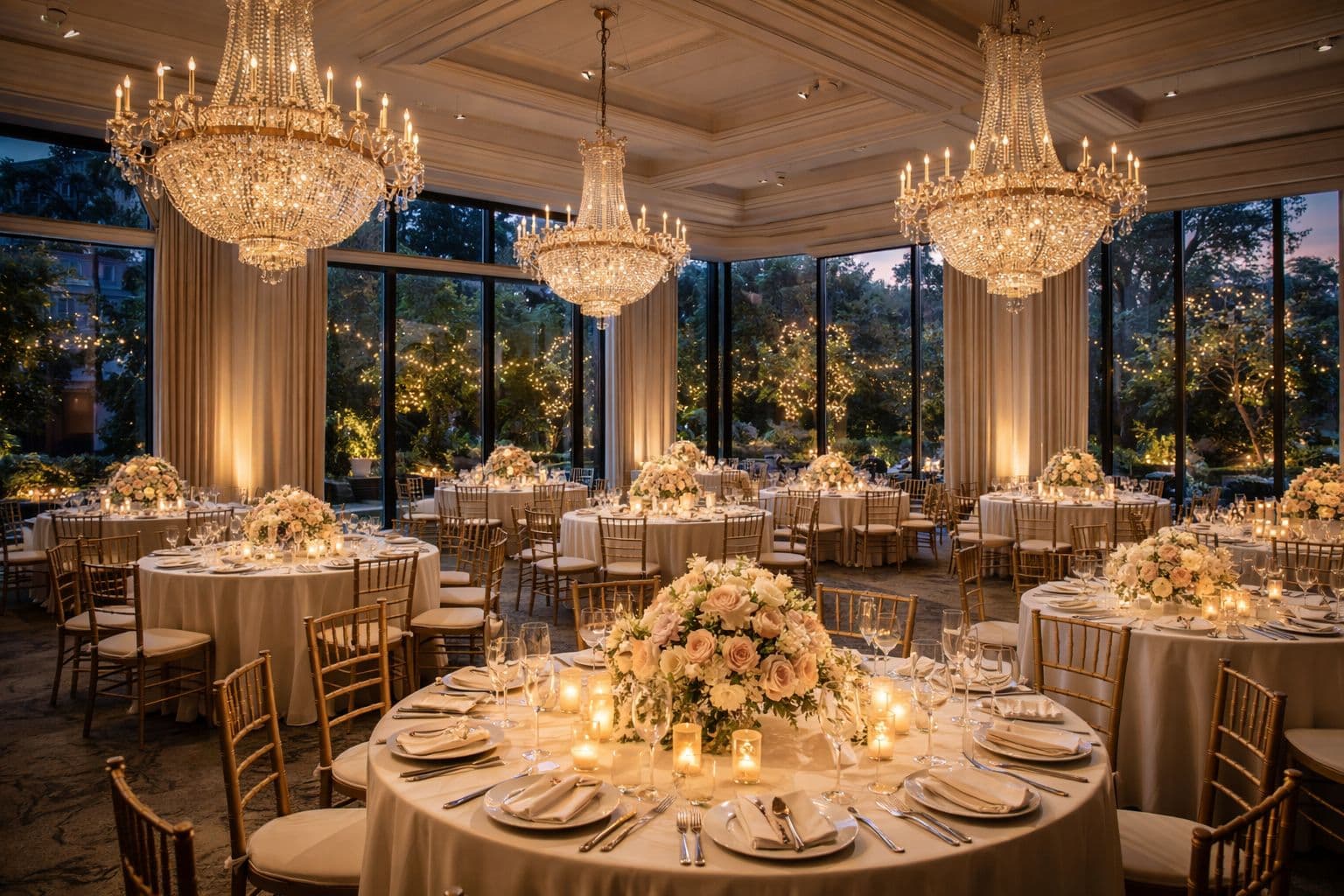
The global wedding services market is projected to surpass $414 billion by 2030, and hotels that position themselves as premier wedding venues stand to capture a significant share of that spending. Unlike standalone venues, hotels offer something uniquely compelling: the ability to bundle accommodations, catering, event space, and guest experiences under one roof. Yet many properties underperform in this category simply because their marketing fails to communicate that value.
This guide is designed for hotel general managers, directors of sales, and marketing teams who want to build a systematic, repeatable approach to wedding venue marketing. Whether your property already hosts a handful of weddings each year or you are launching a wedding program from scratch, the strategies below will help you attract more inquiries, convert more site visits into signed contracts, and ultimately grow wedding revenue as a core business line. LOVU’s hotel marketing platform can help you accelerate many of these strategies, but the fundamentals covered here apply regardless of the tools you use.
We will walk through ten interconnected pillars of wedding venue marketing, from assessing your physical space all the way to measuring ROI. Along the way, you will find links to deeper guides on specific topics so you can drill into the areas that matter most to your property right now.
1. Assess Your Property’s Wedding Potential
Before you spend a dollar on marketing, you need an honest, clear-eyed evaluation of what your hotel can actually deliver for wedding clients. Couples and their planners are extraordinarily detail-oriented, and any gap between what you promise and what you can execute will show up in reviews and referrals.
Evaluate Your Physical Spaces
Walk your property through the lens of a couple planning their most important day. Consider every space that could host a ceremony, cocktail hour, reception, or after-party:
- Outdoor spaces: Gardens, courtyards, rooftop terraces, pool decks, beachfront areas, and lawns. Note the maximum capacity for each in both seated-dinner and standing-reception configurations.
- Indoor spaces: Ballrooms, private dining rooms, lobbies, atriums, and conference rooms that can be transformed. Pay attention to ceiling heights, natural light, built-in audio/visual systems, and load-in access for vendors.
- Transition areas: Where do guests move between the ceremony and reception? Is the flow intuitive, or does it require signage and staff direction? Smooth transitions are a major selling point.
- Getting-ready suites: Do you have suites or rooms near the event space where bridal parties can prepare? This is a frequently overlooked revenue opportunity and a genuine differentiator.
Create a detailed spec sheet for each space that includes dimensions, capacities at various table configurations (rounds of 8, rounds of 10, long tables), electrical outlet locations, rigging points for lighting and decor, and any restrictions (noise ordinances, open-flame policies, curfew times).
Audit Your Operational Capabilities
Weddings are operationally complex. Honestly assess your team’s bandwidth and expertise:
- Catering: Can your kitchen handle a plated dinner for 200 while still serving the hotel restaurant? Do you offer tasting menus for prospective couples? What is your range of cuisine options?
- Staffing: Do you have dedicated banquet staff, or are you pulling from the front desk and restaurant? Weddings require a higher service-to-guest ratio than corporate events.
- Vendor coordination: Are you prepared to work with outside DJs, florists, photographers, and planners? Do you have a preferred vendor list, and do you charge vendor meal fees?
- Timeline management: Who on your team serves as the day-of point of contact? This person needs to be experienced, composed under pressure, and empowered to make real-time decisions.
Benchmark Against Competitors
Research what other hotels and dedicated venues in your market charge, what they include, and how they position themselves. Attend local bridal shows as a guest before exhibiting. Read competitor reviews on The Knot, WeddingWire, and Google to identify gaps you can fill. If every competitor struggles with “the food was mediocre,” that is your opening to lead with culinary excellence.
Identify Your Capacity Sweet Spot
Not every hotel should chase 300-guest galas. If your best space comfortably holds 80 guests for a seated dinner, own that positioning. Intimate weddings and micro-weddings are a rapidly growing segment, and properties that try to oversell their capacity create poor experiences. Determine the range of wedding sizes you can serve exceptionally well, and build your marketing around that honest assessment.
2. Define Your Wedding Venue Brand Identity
Your wedding brand identity is the story you tell the market about what it feels like to get married at your property. It goes far beyond a logo or color scheme. It is the emotional promise that makes a couple choose you over the dozens of other options they are evaluating.
Clarify Your Positioning Statement
A strong positioning statement answers three questions: Who is your ideal wedding client? What do you offer that is meaningfully different? Why should they believe you? For example:
- Luxury beachfront resort: “For couples who want a barefoot-elegant destination wedding, [Property Name] delivers five-star catering, oceanfront ceremony spaces, and dedicated planning support so every guest feels like they are on vacation, not just attending an event.”
- Historic urban hotel: “For couples who value timeless architecture and world-class dining, [Property Name] offers a landmark setting in the heart of downtown with the service standards of a boutique property.”
- Mountain lodge: “For adventurous couples who want to celebrate surrounded by nature, [Property Name] combines rustic charm with modern comfort for weddings from 20 to 150 guests.”
Your positioning should be specific enough to attract your ideal client and clear enough to filter out poor fits. Trying to be everything to everyone results in a brand that resonates with no one.
Develop Your Visual Identity
Wedding marketing is intensely visual. The imagery and design language you use across every touchpoint needs to be consistent and aspirational:
- Photography style: Decide whether your brand leans editorial, photojournalistic, light and airy, moody and dramatic, or some other aesthetic. This guides every photo shoot and dictates which real wedding photos you feature.
- Color palette: Select 3-5 colors that reflect your property’s atmosphere. These should appear consistently on your website, social media, printed materials, and even your event proposals.
- Typography: Choose fonts that feel appropriate to your positioning. A modern minimalist hotel uses different typography than a rustic vineyard estate.
- Design templates: Create branded templates for proposals, floor plans, menus, timelines, and social media posts so everything that leaves your property reinforces the same visual story.
Craft Your Brand Voice
How you write and speak matters as much as how you look. Define guidelines for tone, vocabulary, and personality:
- Are you formal and refined, or warm and conversational?
- Do you use industry jargon, or do you translate everything into accessible language?
- How do you handle humor? Weddings are joyful, and a little personality goes a long way, but the wrong joke can feel unprofessional.
Document these decisions in a brand guide that every team member, from the sales director to the social media coordinator, can reference. Consistency builds trust, and trust is what converts inquiries into contracts.
Differentiate Through Signature Experiences
Identify 2-3 experiences that are unique to your property and make them central to your brand story. These could be:
- A signature cocktail program where couples create a custom drink that is served at their wedding
- A “morning after” brunch package on your terrace with views of the ceremony site
- Access to a private chef’s table for the rehearsal dinner
- A lantern release, fireworks display, or other dramatic send-off that only your location can accommodate
These signature elements become the hooks that make your property memorable and shareable, which directly feeds your social media and word-of-mouth marketing.
3. Build a Wedding-Specific Website Section
Your hotel’s general website is designed to sell room nights. Selling weddings requires a different information architecture, different calls to action, and a different emotional journey. A dedicated wedding section, or even a standalone microsite, is essential.
Essential Pages and Content
At minimum, your wedding web presence should include:
- Wedding landing page: A visually stunning overview that communicates your positioning, showcases your best imagery, and includes a clear call to action to request information or schedule a tour.
- Venue spaces gallery: Individual pages or sections for each ceremony and reception space, with professional photos, capacity details, and floor plan options.
- Packages and pricing: You do not need to publish exact prices if that does not fit your market, but provide enough information for couples to self-qualify. “Packages starting at $15,000 for up to 100 guests” saves everyone time.
- Real weddings gallery: Feature 5-10 real weddings with diverse styles, sizes, and seasons. Include the couple’s names (with permission), their wedding planner and photographer credits, and a brief story about their day.
- FAQ page: Answer the 20 most common questions your sales team fields. This reduces friction, demonstrates expertise, and helps with SEO.
- Contact and inquiry form: Make it effortless to reach you. Include a form that captures wedding date, estimated guest count, and how they heard about you. Offer multiple contact methods including phone, email, and the form itself.
For more on building a website that converts romance-travel visitors into bookings, see our detailed breakdown of 12 must-have features for honeymoon resort websites, many of which apply directly to wedding venue pages.
User Experience Best Practices
- Mobile-first design: Over 70% of initial wedding research happens on mobile devices. Your wedding pages must load fast, look beautiful, and function perfectly on phones.
- Page speed: Compress images, use lazy loading, and minimize scripts. A one-second delay in load time can reduce conversions by 7%.
- Social proof: Embed review excerpts, awards, and press mentions throughout the wedding section, not just on a testimonials page.
- Live chat or chatbot: Couples research venues at all hours. A chat widget that can capture basic information and set expectations for follow-up response time ensures you never lose a lead because your office was closed.
Lead Capture Strategy
Every page in your wedding section should have a purpose, and that purpose is almost always to generate a qualified lead. Map out the conversion paths:
- Blog post about wedding trends leads to a downloadable planning checklist, which requires an email address.
- Venue gallery page leads to a “Schedule a Tour” button, which opens a booking calendar.
- Pricing page leads to “Request a Custom Proposal” form, which captures detailed event information.
Track these conversion paths in your analytics so you know which content is driving the most qualified leads and where prospects are dropping off.
4. Photography and Videography for Venue Marketing
In wedding marketing, visuals are not supporting content. They are the content. A couple will scroll past pages of well-written copy, but they will stop and stare at a stunning image of a ceremony space bathed in golden-hour light. Your investment in photography and videography is the single highest-ROI marketing spend you will make.
Professional Photo Shoots
Schedule dedicated photo shoots at least twice per year to capture your spaces in different seasons and lighting conditions. Here is how to maximize each shoot:
- Hire a wedding photographer, not a commercial photographer. Wedding photographers understand the angles, emotions, and details that resonate with couples.
- Stage the spaces: Set up tables with linens, centerpieces, place settings, and candles. Hang drapery or floral installations. The goal is to help couples envision their own wedding in your space.
- Capture variety: Wide establishing shots, medium shots of table details, close-ups of floral arrangements and place cards, and lifestyle shots of models or real couples in the space.
- Shoot in multiple lighting conditions: Daytime with natural light, twilight during golden hour, and evening with candles and uplighting. Each tells a different story about what is possible.
- Include behind-the-scenes content: Photos and short clips of your team setting up the space, the chef plating the tasting menu, and the florist arranging centerpieces. This humanizes your brand and showcases your operational excellence.
Leverage Real Weddings
Every wedding you host is a marketing opportunity. Build relationships with the couples and their photographers so you can access and share professional images from real events:
- Include a clause in your contract that grants you permission to use images for marketing purposes.
- Offer a small incentive, such as a complimentary anniversary dinner, in exchange for couples sharing their professional photos with you.
- Create a streamlined process for collecting and organizing these images, tagging them by season, size, style, and space.
Real wedding photos are more authentic and varied than staged shoots, and they provide an ever-growing library of content for your website, social media, and advertising.
Video Content Strategy
Video is increasingly dominant in wedding marketing. Consider investing in:
- Venue tour video (2-3 minutes): A cinematic walkthrough of your property that highlights ceremony and reception spaces, getting-ready suites, and surrounding scenery.
- Real wedding highlight films (3-5 minutes): Partner with videographers to obtain short films from real weddings held at your property. These are extraordinarily powerful marketing assets.
- Short-form social content (15-60 seconds): Vertical video clips optimized for Instagram Reels, TikTok, and YouTube Shorts. These might show a time-lapse of a ballroom transformation, a first dance, or a drone shot of your grounds.
- Testimonial videos (1-2 minutes): Couples sharing their experience in their own words. Keep these natural and unscripted for maximum authenticity.
Drone and Aerial Photography
If your property has impressive grounds, waterfront access, or dramatic architecture, drone photography and videography can showcase scale and setting in ways that ground-level shots cannot. Ensure your drone operator is FAA-certified and that you have any necessary permits for your location.
5. SEO Strategy for Wedding Venue Searches
Search engine optimization is the long game of wedding venue marketing, but it is a game with compounding returns. Couples actively searching “wedding venues in [your city]” or “beachfront hotel weddings [your region]” have high intent. Ranking on the first page for these queries puts you in front of people who are ready to book.
Keyword Research
Start with a systematic keyword research process:
- Primary keywords: “wedding venue [city/region],” “hotel wedding [city/region],” “destination wedding [region]”
- Long-tail keywords: “intimate wedding venue [city] under 50 guests,” “all-inclusive wedding package [region],” “outdoor ceremony venues [city] with hotel”
- Question-based keywords: “how much does a hotel wedding cost in [city],” “what to look for in a wedding venue,” “best time of year for outdoor wedding [region]”
- Comparison keywords: “hotel wedding vs. standalone venue,” “all-inclusive wedding venue pros and cons”
Use tools like Google Keyword Planner, Ahrefs, or SEMrush to estimate search volume and competition for each term. Prioritize keywords with meaningful volume (50+ monthly searches) and moderate competition where you have a realistic chance of ranking.
On-Page SEO
Optimize every page in your wedding section:
- Title tags: Include your primary keyword and location. Example: “Oceanfront Wedding Venue in Maui | [Hotel Name]”
- Meta descriptions: Write compelling 150-160 character descriptions that include keywords and a call to action.
- Header structure: Use H2s and H3s to organize content logically, incorporating secondary keywords naturally.
- Image alt text: Describe every image with keyword-rich but accurate alt text. “Outdoor ceremony setup with ocean view at [Hotel Name]” is better than “IMG_4523.”
- Internal linking: Link between your wedding pages, blog posts, and relevant hotel pages. This helps search engines understand your content structure and passes authority between pages.
- Schema markup: Implement LocalBusiness and EventVenue structured data to help search engines display rich results for your property.
Local SEO
For most hotels, wedding bookings come from within a defined geographic radius or from specific feeder markets. Local SEO ensures you appear in those searches:
- Google Business Profile: Claim and fully optimize your listing. Add wedding-specific photos, respond to every review, and post regular updates about your wedding services.
- Local directories: Ensure your property is listed on The Knot, WeddingWire, Zola, and regional wedding directories with consistent name, address, and phone number (NAP) information.
- Local content: Publish blog posts about weddings in your specific area: “The Best Season for Outdoor Weddings in [City],” “Top 10 Wedding Vendors in [Region],” and similar locally-relevant content.
Content Marketing for SEO
A blog that addresses the questions and concerns of engaged couples is one of the most effective ways to build organic search traffic over time. Aim to publish at least 2-4 wedding-related blog posts per month covering topics like:
- Seasonal wedding planning guides for your region
- Real wedding features with detailed descriptions and vendor credits
- Venue comparison guides (tactfully positioning your property)
- Wedding trend roundups that showcase how your property adapts
- Planning checklists and timelines
For more on avoiding common pitfalls that undermine your SEO and marketing efforts, read our guide on 5 common wedding venue marketing mistakes to avoid.
6. Social Media Marketing for Wedding Venues
Social media is where engaged couples discover, evaluate, and fall in love with wedding venues before ever scheduling a tour. A strategic social media presence can generate a steady pipeline of qualified inquiries, but only if you approach it with the same rigor you apply to any other marketing channel.
For a deep dive into platform-specific tactics, content calendars, and engagement strategies, see our Social Media Marketing Guide for Wedding Venues. Below is a strategic overview.
Platform Prioritization
Not every platform deserves equal investment. Prioritize based on where your target couples spend their time:
| Platform | Best For | Content Type | Posting Frequency |
|---|---|---|---|
| Discovery, inspiration, engagement | Photos, Reels, Stories, Carousels | 4-7x per week | |
| Long-term discovery, SEO value | Vertical pins, idea pins, boards | 10-15 pins per week | |
| TikTok | Reaching younger couples, viral potential | Short-form video, trends, BTS | 3-5x per week |
| Older demographics, community, events | Event pages, albums, reviews | 3-4x per week | |
| YouTube | Venue tours, real wedding films, SEO | Long-form video | 2-4x per month |
Content Pillars
Organize your social media content around 4-5 recurring themes:
- Venue showcases: Beautifully photographed and filmed content of your spaces in various setups and lighting conditions.
- Real weddings: Highlight real couples who celebrated at your property. Tag their vendors to expand reach.
- Behind the scenes: Show your team preparing for events, the chef creating tasting menus, and the grounds being maintained. This builds trust and humanizes your brand.
- Planning tips and education: Share useful advice that positions your team as experts. “3 questions to ask during your venue tour” or “How to plan a rain backup for an outdoor ceremony.”
- Testimonials and reviews: Share quotes and video snippets from happy couples. User-generated content is more trusted than branded content.
Engagement Strategy
Social media is a two-way channel. Prioritize engagement as much as content creation:
- Respond to every comment and DM within 2 hours during business hours. Slow responses lose leads to faster competitors.
- Engage with wedding vendors, planners, and photographers in your area. Comment on their posts, share their work (with credit), and build reciprocal relationships.
- Monitor hashtags and location tags for your property. When couples post about your venue, engage immediately and ask permission to share.
- Use interactive features: Polls, Q&A stickers, and countdowns on Instagram Stories drive engagement and surface what your audience cares about.
Paid Social Media
Organic reach continues to decline across all platforms. Allocate budget for targeted paid campaigns:
- Engagement campaigns: Boost your highest-performing organic posts to reach more people in your target demographic.
- Lead generation campaigns: Run ads with a lead form that captures name, email, wedding date, and guest count. Offer a downloadable venue brochure or planning guide as an incentive.
- Retargeting campaigns: Show ads to people who visited your wedding pages but did not submit an inquiry. These warm audiences convert at 3-5x the rate of cold audiences.
7. Travel Advisor and Wedding Planner Partnerships
Referral relationships with wedding planners and travel advisors can become your most efficient and highest-converting lead source. These professionals influence where their clients celebrate, and a strong partnership ensures your property is consistently recommended.
Building Relationships with Wedding Planners
Wedding planners are the gatekeepers of venue selection for a significant percentage of weddings, especially in the destination wedding and luxury segments:
- Identify key planners in your market: Research who is actively planning weddings in your area or directing destination weddings to your region. Look at vendor credits on published weddings, local planner directories, and social media.
- Host planner familiarization events: Invite 10-15 planners to experience your property as a guest would. Provide a full venue tour, a tasting menu sampling, and a frank conversation about your capabilities and logistics.
- Create a planner-specific information kit: Include floor plans, capacities, sample menus, pricing structures, vendor policies, load-in logistics, and high-resolution marketing images planners can use in their client presentations.
- Offer competitive commissions: Industry standard is 10% of the venue fee. Some properties offer tiered commissions that increase with volume. Whatever your structure, pay promptly and without friction.
- Maintain ongoing communication: Send quarterly updates about renovations, new menu options, seasonal availability, and any changes to policies. Planners who feel informed and valued send more referrals.
Working with Travel Advisors
For destination weddings, travel advisors play a crucial role in recommending properties and coordinating group travel logistics. Learn more about how properties in the romance travel segment can attract more destination bookings in our guide on how to attract more destination wedding bookings to your hotel in 2026.
Key strategies for travel advisor partnerships:
- List your property on advisor-facing platforms: Ensure your wedding packages and group booking capabilities are visible on platforms and consortia that advisors use to research properties.
- Offer group booking incentives: Destination weddings involve room blocks. Make your group rate competitive, offer complimentary upgrades for the couple, and provide flexible attrition clauses that reduce advisor risk.
- Provide co-brandable marketing materials: Give advisors templates they can customize with their own branding to present your property to clients.
- Assign a dedicated contact: Travel advisors need a single, responsive point of contact at your property who can handle group bookings, special requests, and last-minute changes.
Vendor Network Development
Beyond planners and advisors, build relationships with the full ecosystem of wedding vendors:
- Photographers and videographers: Their work appears on hundreds of blogs and social media accounts. Being a venue they love to shoot at means organic promotion.
- Florists and decorators: They can recommend your spaces to clients looking for venues that complement specific design aesthetics.
- DJs and bands: Entertainment professionals work at dozens of venues and are frequently asked for recommendations.
- Officiants: They perform ceremonies at multiple venues and interact directly with couples during the planning process.
Create a preferred vendor list that you actively maintain and promote. This is valuable to couples, creates goodwill with vendors, and gives you quality control over the wedding experience at your property.
8. Paid Advertising for Wedding Venues
While organic strategies build long-term value, paid advertising delivers immediate visibility and measurable results. A well-structured paid media strategy can fill your inquiry pipeline within weeks rather than months.
Google Ads
Search advertising on Google captures couples at the highest point of intent. When someone searches “wedding venue in Napa Valley,” they are actively evaluating options:
- Search campaigns: Bid on high-intent keywords like “wedding venue [city],” “hotel wedding packages [region],” and “destination wedding [area].” Use exact match and phrase match to control spend.
- Location targeting: Target the geographic areas where your couples live, not just where your property is located. If you are a destination wedding venue in Mexico, your ads should target engaged couples in Los Angeles, Dallas, and New York.
- Ad extensions: Use sitelink extensions to link directly to your venue gallery, pricing page, and tour scheduling page. Use callout extensions to highlight differentiators like “All-Inclusive Packages” or “Oceanfront Ceremonies.”
- Landing pages: Send ad traffic to dedicated landing pages, not your homepage. Each landing page should match the ad’s promise and include a single, clear call to action.
Budget Allocation
A reasonable starting budget for Google Ads in most markets is $2,000-$5,000 per month. Allocate approximately:
| Channel | Percentage | Purpose |
|---|---|---|
| Google Search | 40-50% | High-intent keyword capture |
| Social media ads | 25-35% | Awareness, engagement, retargeting |
| Directory listings (The Knot, WeddingWire) | 15-25% | High-intent marketplace presence |
| Retargeting (display) | 5-10% | Re-engaging website visitors |
Adjust these ratios based on performance data. If Google Search is delivering inquiries at $50 each and social media at $150 each, shift budget accordingly.
Wedding Directory Advertising
Platforms like The Knot and WeddingWire charge for premium placements, but they deliver highly qualified traffic. Couples visiting these platforms are actively in planning mode:
- Optimize your listing: Treat your directory profile like a second website. Include 30+ high-quality photos, detailed descriptions, accurate pricing information, and all available awards and reviews.
- Respond to inquiries within one hour: Directory platforms often share your lead with multiple venues. The first to respond wins the site visit more than 50% of the time.
- Collect reviews aggressively: Your ranking on these platforms is heavily influenced by review quantity and recency. Make it standard practice to request a review from every couple after their wedding.
Retargeting Campaigns
Most couples visit 5-10 venue websites before scheduling tours. Retargeting keeps your property top-of-mind after they leave your site:
- Pixel your wedding pages: Install Facebook, Google, and any other relevant retargeting pixels on every page in your wedding section.
- Segment your audiences: Create separate retargeting audiences for people who viewed your gallery, people who visited your pricing page, and people who started but did not complete your inquiry form.
- Tailor creative to the stage: Someone who viewed your gallery might see an ad featuring a real wedding testimonial. Someone who abandoned your inquiry form might see an ad offering to schedule a virtual tour.
For related strategies on pricing your wedding and romance packages effectively, explore our article on hotel revenue management for romance travel.
9. Email Marketing and Lead Nurturing
The average couple takes 6-12 months to plan a wedding, and they do not choose a venue on the first visit to your website. Email marketing bridges the gap between initial discovery and final decision, keeping your property top-of-mind through a long consideration cycle.
Building Your Email List
Grow your wedding-specific email list through multiple channels:
- Website inquiry forms: Every form submission is an email capture opportunity. Segment these leads immediately based on wedding date, guest count, and budget.
- Content downloads: Offer gated resources like a “Complete Guide to Planning a Wedding at [Hotel Name],” a budgeting worksheet, or a vendor checklist. Require an email address to download.
- Bridal shows and events: Collect email addresses at every event you attend or host. Use a tablet with a digital sign-up form rather than a fishbowl of business cards.
- Social media lead generation ads: Run campaigns that capture email addresses directly within the social platform, with a lower-friction experience than driving to a landing page.
Email Nurture Sequences
Design automated email sequences that guide prospects through the decision-making process:
Sequence 1: New Inquiry Response (Days 1-7)
- Email 1 (Immediate): Thank them for their inquiry, confirm receipt, and set expectations for response time. Include a link to your venue gallery.
- Email 2 (Day 2): Share a real wedding story that matches their estimated guest count or preferred season.
- Email 3 (Day 5): Offer to schedule a property tour (in-person or virtual) and include available dates.
- Email 4 (Day 7): Share a testimonial from a recent couple and a link to your FAQ page.
Sequence 2: Post-Tour Follow-Up (Days 1-14)
- Email 1 (Same day): Thank them for visiting, recap the highlights of their tour, and attach a preliminary proposal.
- Email 2 (Day 3): Share an article or blog post relevant to their wedding vision.
- Email 3 (Day 7): Check in and ask if they have questions about the proposal.
- Email 4 (Day 14): Offer a limited-time incentive, such as a complimentary upgrade or added amenity, to encourage a decision.
Sequence 3: Long-Term Nurture (Monthly)
- For leads who are not yet ready to book, send a monthly email with seasonal content, newly published real wedding features, special offers, and planning tips.
Segmentation and Personalization
The more relevant your emails, the higher your conversion rates. Segment your list by:
- Wedding date: Couples getting married in 3 months need different content than those planning 18 months out.
- Guest count: A couple planning a 200-person reception has different concerns than a 30-guest micro-wedding.
- Wedding style: If you captured style preferences (rustic, modern, classic, bohemian) during the inquiry, tailor your imagery and real wedding features accordingly.
- Engagement level: Prioritize follow-up for leads who open every email and click through to your site over those who have not engaged in months.
Email Design and Deliverability
- Keep your design clean, on-brand, and mobile-responsive. Over 60% of emails are read on mobile devices.
- Use a recognizable sender name like “Sarah at [Hotel Name] Weddings” rather than a generic noreply address.
- Write subject lines that are specific and curiosity-driven: “Your October wedding at [Hotel Name]: 3 things to know” outperforms “Monthly Newsletter.”
- Monitor your deliverability rates. If your open rate drops below 15%, clean your list and re-evaluate your sending frequency.
10. Measuring Success: KPIs for Wedding Venue Marketing
Marketing without measurement is guesswork. Establishing clear key performance indicators (KPIs) ensures you can identify what is working, eliminate what is not, and allocate your budget to the highest-returning channels.
Lead Generation KPIs
| Metric | What It Measures | Target Benchmark |
|---|---|---|
| Total inquiries per month | Volume of new leads | Varies by market; track trend over time |
| Inquiry source breakdown | Which channels produce leads | Diversified; no single source > 40% |
| Cost per inquiry (CPI) | Efficiency of paid channels | $30-$100 for paid search; $50-$150 for social |
| Inquiry-to-tour conversion rate | Quality of initial response | 30-50% |
| Website conversion rate | Effectiveness of wedding pages | 2-5% of wedding page visitors submit inquiry |
Sales Pipeline KPIs
| Metric | What It Measures | Target Benchmark |
|---|---|---|
| Tour-to-proposal conversion rate | Effectiveness of tours and sales team | 60-80% |
| Proposal-to-booking conversion rate | Competitiveness of your offer | 25-40% |
| Average time from inquiry to booking | Length of sales cycle | 30-90 days |
| Average wedding revenue per event | Financial performance | Track and grow year-over-year |
| Booking pace by month | Seasonality and forward pipeline | Compare to same period prior year |
Marketing Channel KPIs
Track performance at the channel level so you know where to invest:
- Organic search: Track rankings for target keywords, organic traffic to wedding pages, and organic inquiries.
- Paid search: Track impressions, clicks, click-through rate, cost per click, and cost per inquiry.
- Social media: Track follower growth, engagement rate, website clicks from social, and social-attributed inquiries.
- Email: Track open rate (target 25%+), click-through rate (target 3-5%), and email-attributed tour bookings.
- Referral partners: Track inquiries from each planner and advisor, conversion rates by referral source, and commission payouts.
Revenue and ROI Metrics
Ultimately, your wedding marketing must deliver a positive return on investment:
- Total wedding revenue: Sum of venue fees, catering, beverage, room block revenue, and ancillary spending (spa, dining, activities) from wedding guests.
- Marketing cost as a percentage of wedding revenue: Aim for 8-15% in the growth phase, declining to 5-10% as your reputation and organic channels mature.
- Customer lifetime value (CLV): A wedding couple often returns for anniversaries, recommends your property to friends, and writes reviews that generate future bookings. Factor this long-term value into your ROI calculations.
- Revenue per available event space (RevPAS): Similar to RevPAR for hotel rooms, this metric helps you understand whether your event spaces are being utilized and priced optimally.
Reporting Cadence
- Weekly: Review inquiry volume, response times, and tour schedule.
- Monthly: Full marketing performance review across all channels, including spend, leads, conversions, and pipeline value.
- Quarterly: Strategic review of positioning, pricing, competitive landscape, and budget allocation for the coming quarter.
- Annually: Comprehensive year-in-review covering total wedding revenue, year-over-year growth, marketing ROI, and strategic planning for the year ahead.
Bringing It All Together: Your Wedding Venue Marketing Action Plan
Marketing a hotel as a wedding venue is not a single campaign or a one-time project. It is an integrated, ongoing effort that touches every department from sales and marketing to culinary, operations, and revenue management. The properties that consistently win in this space share a few common traits:
They are honest about their strengths. They do not try to be something they are not. They identify what makes their property special and build every piece of marketing around that truth.
They invest in visuals relentlessly. They understand that a single stunning photograph can generate more inquiries than a thousand words of copy. They budget for professional photography, maintain their image library, and ensure every visual touchpoint is on-brand.
They build systems, not just campaigns. They have automated email sequences, CRM workflows, referral tracking, and reporting dashboards that ensure no lead falls through the cracks and every marketing dollar is accounted for.
They nurture relationships. They treat wedding planners, travel advisors, photographers, and other vendors as genuine partners, not just referral sources. These relationships compound over time into a self-sustaining ecosystem of recommendations.
They measure everything. They know their cost per inquiry, their conversion rates at every stage, and their total revenue per wedding. They use this data to make informed decisions rather than relying on intuition.
Your First 90 Days
If you are just getting started or resetting your wedding marketing strategy, here is a prioritized action plan:
Month 1: Foundation
- Complete your property assessment and identify your 2-3 best wedding spaces
- Define your positioning statement and brand identity
- Schedule a professional photo shoot
- Audit and optimize your website’s wedding section
Month 2: Visibility
- Launch your SEO strategy with keyword research and on-page optimization
- Optimize your Google Business Profile and wedding directory listings
- Begin a consistent social media posting schedule
- Reach out to 10 wedding planners for introductory meetings
Month 3: Acceleration
- Launch Google Ads and social media advertising campaigns
- Implement your email nurture sequences
- Host your first planner familiarization event
- Set up your KPI dashboard and begin weekly reporting
From there, iterate. Double down on what works, cut what does not, and continuously refine your approach based on data.
For additional strategies on building romance-travel revenue streams that complement your wedding business, explore these related resources:
- How to design profitable honeymoon packages that capture post-wedding travel spend
- 7 hotel amenities that make couples book direct to increase direct bookings from your wedding guests
- Romance travel package ideas: 15 templates hotels can launch this month for expanding beyond weddings into honeymoons and anniversaries
- Eco-romance marketing: sustainable getaways for green-minded travelers to attract the growing segment of eco-conscious couples
Hotel wedding venue marketing rewards patience, consistency, and a willingness to invest in quality. The properties that commit to these ten pillars, and execute them well over time, build a wedding business that generates significant revenue, strengthens their broader brand, and creates a powerful competitive moat. LOVU’s platform is built to help hotels in the romance travel space accelerate exactly this kind of growth. Start where you are, build on what you have, and measure as you go.