
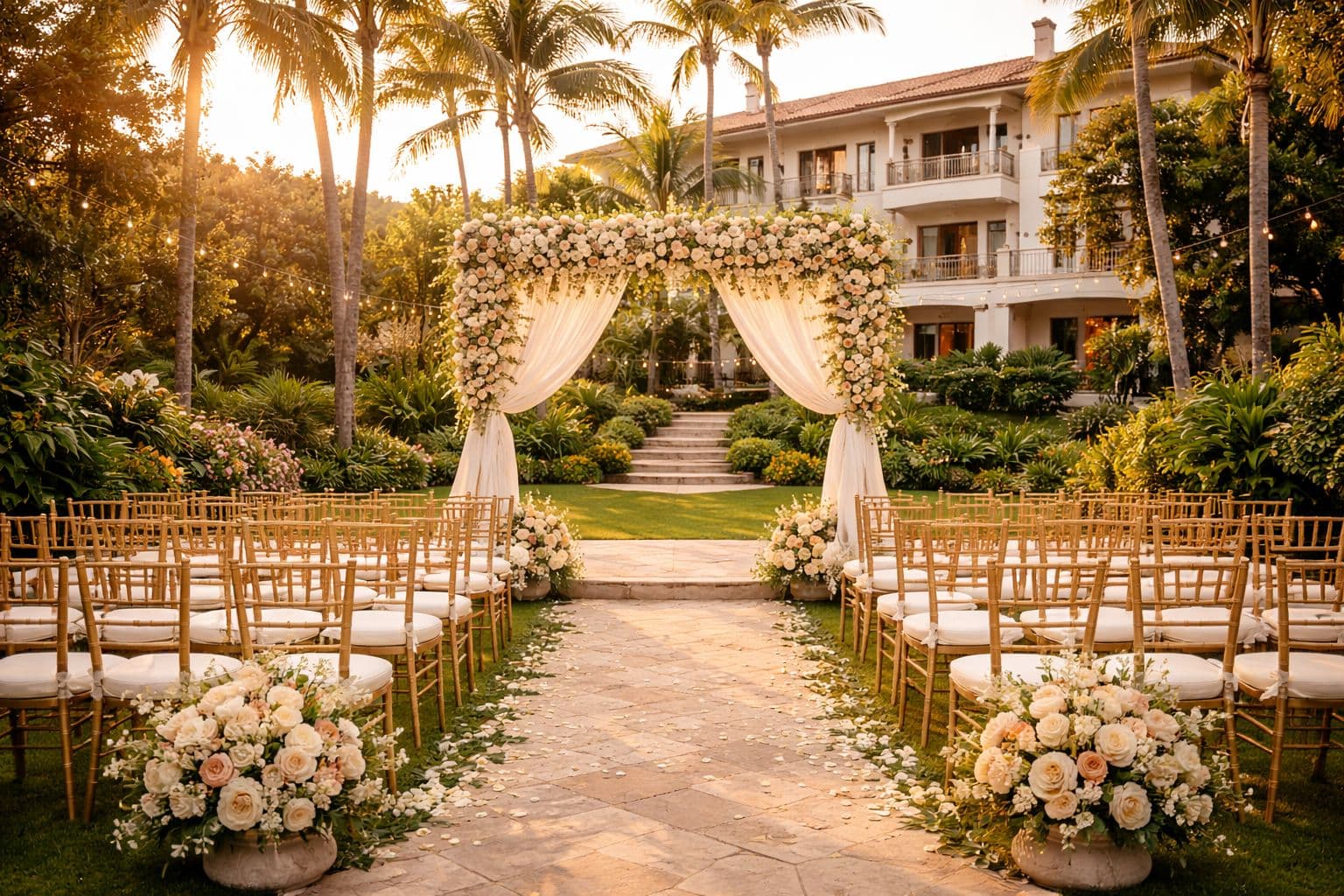
Destination weddings now account for roughly one in four weddings in the United States, and the trend is accelerating. Couples are choosing to combine their ceremonies with travel experiences, turning wedding weekends into multi-day events that generate significant room-night revenue, food and beverage spend, and ancillary income for the host property. For hotels and resorts positioned to capture this demand, destination weddings represent one of the most profitable segments in hospitality.
Yet many properties still treat weddings as a side benefit rather than a strategic revenue channel. The hotels winning the most bookings in 2026 are those that approach destination weddings with the same rigor they bring to corporate group sales – dedicated landing pages, optimized directory listings, travel advisor partnerships, and CRM-powered lead nurturing. Platforms like LOVU are helping properties connect with engaged couples and the travel advisors who serve them, but the foundation still starts with your own marketing and operations.
This guide breaks down eight actionable strategies to help your hotel attract, convert, and retain more destination wedding bookings this year.
1. Why Destination Weddings Are a Hotel Revenue Goldmine
Before investing in new marketing channels, it helps to understand the economics. Destination weddings are not just emotionally significant events – they are high-value commercial opportunities with measurable financial upside.
The Numbers Behind the Trend
The average destination wedding in the U.S. costs between $30,000 and $50,000, with a significant portion of that budget flowing directly to the host venue. But the real revenue multiplier comes from the guest block. A typical destination wedding brings 50 to 100 guests who book an average of two to three nights, generating anywhere from 100 to 300 incremental room nights per event.
Consider the broader revenue picture for a single destination wedding:
| Revenue Stream | Typical Range Per Event |
|---|---|
| Guest room block (50-100 rooms, 2-3 nights) | $15,000 - $45,000 |
| Ceremony and reception venue fees | $5,000 - $20,000 |
| Catering and beverage packages | $10,000 - $40,000 |
| Spa and wellness services | $2,000 - $8,000 |
| Welcome events, rehearsal dinners, brunches | $3,000 - $15,000 |
| Photography, florals, entertainment | Varies (partner revenue) |
A single destination wedding can deliver $35,000 to $130,000 in total property revenue, and that does not account for the repeat bookings that often follow. Anniversary trips, vow renewals, and referrals from guests who fell in love with your property extend the lifetime value well beyond the initial event.
Why the Segment Is Growing
Several factors are driving the growth of destination weddings in 2026. Couples are marrying later and often have more disposable income. Social media has normalized the idea of a “travel wedding,” and platforms like Pinterest and Instagram have made exotic venues more discoverable. Remote work has also expanded couples’ sense of what is geographically possible – if you can work from anywhere, why not marry anywhere?
For hotels looking to capitalize on this trend, the key is positioning your property as not just a place to stay, but the centerpiece of an unforgettable celebration.
2. Optimize Your Venue Listing for Wedding Searches
The first point of contact for most couples planning a destination wedding is a search engine. Whether they type “destination wedding venues in Mexico” or “beachfront wedding hotel Caribbean,” your property needs to appear in those results.
Local and Niche SEO Fundamentals
Start by auditing your existing SEO footprint for wedding-related keywords. Most hotel websites are optimized for leisure or business travel terms but overlook high-intent wedding queries entirely. Focus on these keyword categories:
- Location + wedding terms: “destination wedding resort [your location],” “beach wedding venue [city/region]”
- Package-focused terms: “all-inclusive wedding packages,” “elopement packages [destination]”
- Comparison terms: “best wedding hotels in [region],” “top destination wedding resorts 2026”
Ensure your Google Business Profile includes “wedding venue” as a category and that your listing features wedding-specific photos, a link to your wedding page, and recent reviews mentioning weddings.
Wedding Directory Listings
Beyond organic search, couples rely heavily on wedding directories and planning platforms. Make sure your property is listed and fully optimized on the most relevant directories for your market:
- The Knot and WeddingWire – Still the largest directories for U.S. couples
- Destination Weddings Travel Group – Focused specifically on destination events
- Brides.com venue directory – High authority and strong organic traffic
- Regional tourism board sites – Often overlooked but highly trusted
Each listing should include professional photography, a clear description of your wedding offerings, capacity details, and a direct inquiry link. Treat these listings like product pages – they need to sell, not just inform. For more on avoiding common pitfalls in this area, see our guide on 5 common wedding venue marketing mistakes to avoid.
3. Build a Dedicated Wedding Landing Page
If your hotel’s wedding information lives on a generic “events” page buried three clicks deep, you are losing bookings. Couples planning a destination wedding want a dedicated, immersive experience that answers their questions and builds emotional excitement from the first visit.
What Your Wedding Page Must Include
A high-converting wedding landing page should contain the following elements:
- Hero section with aspirational imagery – Use real wedding photos from your property (not stock). Show the ceremony site, reception setup, and candid moments that communicate the emotional experience.
- Venue capacity and layout details – Clearly state indoor and outdoor ceremony capacity, reception options, and backup plans for weather.
- Package overview – List two to four wedding packages at different price points. Include what is covered (venue fee, catering, AV, coordinator) and what is add-on.
- Photo gallery or virtual tour – Couples want to visualize their day. Offer a gallery organized by event type (ceremony, cocktail hour, reception, getting-ready suite).
- Testimonials from real couples – Video testimonials are especially powerful. Include the couple’s name, wedding date, and a brief quote about their experience.
- FAQ section – Address common questions: minimum guest counts, room block policies, preferred vendor lists, deposit and cancellation terms.
- Clear call to action – Use a prominent inquiry form, not a generic “Contact Us” link. Ask for wedding date, estimated guest count, and budget range to qualify leads.
Checklist for Page Optimization
Use this checklist to ensure your wedding page is performing at its best:
- [ ] Page loads in under three seconds on mobile
- [ ] Primary keyword (“destination wedding at [Hotel Name]”) appears in the H1, meta title, and first paragraph
- [ ] At least one real wedding testimonial is displayed above the fold
- [ ] Inquiry form requires no more than five fields
- [ ] Page is linked from your main navigation (not buried in a submenu)
- [ ] Schema markup for “Event Venue” is implemented
- [ ] UTM tracking is in place for all referral sources
4. Partner with Travel Advisors Who Specialize in Weddings
Travel advisors remain one of the most effective distribution channels for destination weddings. Unlike leisure bookings where OTAs dominate, wedding couples frequently rely on advisors to coordinate complex, high-stakes logistics across multiple vendors and destinations.
Why Travel Advisors Matter for Weddings
A wedding is not a simple hotel reservation. It involves group room blocks, event space holds, catering coordination, vendor management, and often cross-border logistics. Couples recognize this complexity and actively seek professional guidance. Research from the American Society of Travel Advisors shows that advisor-booked trips have higher satisfaction rates and higher average spend per trip.
For your hotel, a strong travel advisor relationship means:
- Pre-qualified leads – Advisors send you couples who are already committed and budget-aligned
- Higher conversion rates – Advisor-referred inquiries convert at two to three times the rate of cold web leads
- Larger total spend – Advisors often upsell additional experiences, extending the revenue per booking
- Repeat business – A satisfied advisor will send multiple weddings to your property each year
How to Build Advisor Partnerships
Start by identifying the travel advisors and agencies that specialize in destination weddings and romance travel. Attend industry events like the Romance Travel Forum and Destination Wedding Planners Congress. Offer familiarization (FAM) trips so advisors can experience your property firsthand.
Create an advisor-specific section on your website with downloadable resources: a wedding planning guide, a venue spec sheet with high-resolution photos, and a commission structure document. Make it easy for advisors to sell your property by giving them the tools they need.
5. Create Wedding-Specific Packages
Generic “event space rental” pricing does not resonate with wedding couples. They want curated packages that simplify decision-making and communicate value. The best wedding packages bundle logistics so couples can focus on enjoyment rather than coordination.
Package Templates That Convert
Consider structuring your offerings around three tiers:
The Intimate Elopement (2-20 guests)
- Ceremony setup at a signature venue location
- One-hour photography session
- Celebratory dinner for the couple and guests
- Champagne toast and wedding cake
- Bridal suite upgrade with welcome amenity
- Price range: $3,000 - $8,000
The Classic Celebration (20-75 guests)
- Choice of ceremony and reception venue
- Three-hour event coordination
- Customizable catering package (cocktail hour + seated dinner)
- Standard AV and lighting setup
- Group room block with preferred rates
- Complimentary tasting for the couple
- Price range: $10,000 - $30,000
The Grand Affair (75-150+ guests)
- Exclusive venue buyout for the evening
- Full-service wedding coordination (rehearsal through send-off)
- Premium catering with custom menu design
- Upgraded floral, lighting, and decor packages
- Welcome event and farewell brunch included
- VIP spa package for the wedding party
- Price range: $30,000 - $75,000+
Present these packages on your wedding landing page with clear inclusions and the option to customize. Couples want a starting point, not a rigid contract. The tiered approach lets them self-select based on vision and budget, while your team handles the consultative upsell during the inquiry process.
Add-On Revenue Opportunities
Beyond the core package, the following add-ons consistently drive incremental revenue for destination wedding properties:
- Welcome bags for guest rooms ($15-$40 per room)
- Rehearsal dinner at an alternative on-property venue
- Morning-after brunch to close the wedding weekend
- Couples spa treatment on the day before the wedding
- Guest excursions (snorkeling, wine tasting, cultural tours) organized by the hotel
- Late checkout for the wedding party on departure day
6. Showcase Real Weddings with Photo Galleries and Testimonials
Nothing sells a wedding venue more effectively than proof that other couples chose it and loved it. Social proof is the most powerful conversion tool in the wedding industry, and your property should be actively building a library of real wedding stories.
Building Your Real Wedding Portfolio
After every wedding, make it a standard practice to collect content. Work with the couple’s photographer to obtain a set of venue-focused images (with permission). Send a post-event survey that includes questions you can repurpose as testimonials. Offer a small incentive – a complimentary anniversary dinner or a discount on a future stay – in exchange for a detailed review.
Organize your real wedding content by:
- Wedding size (elopement, intimate, grand)
- Season (summer, fall, winter, spring)
- Style (rustic, tropical, elegant, modern)
- Location on property (garden ceremony, ballroom reception, rooftop cocktails)
This organization helps prospective couples find examples that mirror their own vision, making it easier for them to picture their day at your hotel.
Testimonial Strategy
The most effective testimonials go beyond “it was beautiful.” Encourage couples to speak to specifics:
- How the hotel team handled an unexpected challenge (weather, vendor issue)
- What surprised them about the experience
- How guests responded to the venue and accommodations
- Whether they would recommend the property for future events
Display these testimonials prominently on your wedding landing page, in your advisor-facing materials, and in your social media content calendar.
7. Leverage Social Media for Wedding Venue Discovery
Social media has become one of the primary discovery channels for destination wedding venues, particularly Instagram, Pinterest, and TikTok. Couples use these platforms not just for inspiration but for serious venue research.
Platform-Specific Strategies
Instagram remains the dominant platform for wedding venue discovery. Focus on:
- Posting real wedding content at least three times per week
- Using location tags and wedding-specific hashtags (#DestinationWedding, #WeddingVenue[YourLocation])
- Creating Reels that showcase ceremony and reception transformations
- Encouraging couples and vendors to tag your property in their posts
- Building a highlight reel of “Real Weddings” on your profile
Pinterest is a long-term traffic driver. Couples save pins months or years before their wedding. Create boards organized by wedding style and season. Pin your real wedding photos with keyword-rich descriptions that link back to your wedding landing page.
TikTok is gaining ground rapidly. Short-form video tours of your venue, behind-the-scenes setup clips, and couple reaction videos consistently perform well. Properties that embraced TikTok early are seeing significant inquiry volume from younger couples planning 2026 and 2027 weddings.
Content Calendar Framework
Build a monthly content calendar that rotates through these content types:
- Week 1: Real wedding feature (photo carousel + couple quote)
- Week 2: Venue showcase (specific ceremony or reception location)
- Week 3: Behind-the-scenes (setup, chef preparing the menu, florals being arranged)
- Week 4: Testimonial or review highlight
Consistency matters more than perfection. A steady stream of authentic wedding content signals to couples that your property takes weddings seriously. For a deeper dive into social media for wedding properties, check out our social media marketing guide for wedding venues.
8. Track and Nurture Wedding Inquiries with a CRM Workflow
The wedding booking cycle is long – often 12 to 18 months from first inquiry to the event date. Without a structured follow-up system, leads go cold, and couples choose competitors who stayed top of mind. A CRM workflow designed specifically for wedding inquiries can dramatically improve your conversion rate.
Designing Your Wedding CRM Pipeline
Set up a pipeline with the following stages:
| Stage | Action | Timeline |
|---|---|---|
| New Inquiry | Auto-acknowledge within one hour; assign to wedding coordinator | Day 0 |
| Qualification Call | Schedule a discovery call to understand vision, budget, and guest count | Days 1-3 |
| Proposal Sent | Send a customized proposal with package options and venue photos | Days 3-7 |
| Site Visit / Virtual Tour | Offer an in-person tour or live video walkthrough | Days 7-21 |
| Negotiation | Address questions, adjust packages, finalize terms | Days 21-45 |
| Contract Signed | Secure deposit and confirm the date | Days 30-60 |
| Pre-Event Planning | Transition to event coordination team | Ongoing |
Nurture Sequences That Keep Leads Warm
Not every inquiry converts immediately. Build automated email sequences for leads at different stages:
For early-stage inquiries (browsing, no date set):
- Monthly inspiration email featuring a recent real wedding at your property
- Seasonal promotions (off-peak pricing, complimentary upgrades)
- Blog content showcasing your destination
For mid-stage leads (date set, comparing venues):
- Personalized follow-up from the wedding coordinator referencing their specific vision
- Testimonial from a couple with a similar wedding size or style
- Virtual tour invitation with a calendar scheduling link
For stalled leads (went quiet after proposal):
- Check-in email offering to adjust the proposal
- Limited-time incentive (complimentary rehearsal dinner, room upgrade for the couple)
- Final outreach with a low-pressure “we’d love to hear from you” message
Measuring What Matters
Track these KPIs to evaluate and improve your wedding booking pipeline:
- Inquiry-to-proposal rate – What percentage of inquiries receive a proposal? (Target: 80%+)
- Proposal-to-contract rate – How many proposals convert to signed contracts? (Target: 25-40%)
- Average lead response time – How quickly does your team respond to new inquiries? (Target: under 1 hour during business hours)
- Revenue per wedding – Total property revenue including rooms, F&B, and ancillary spend
- Advisor vs. direct inquiry mix – Understanding your channel mix helps allocate marketing budget effectively
Bringing It All Together
Attracting more destination wedding bookings is not about any single tactic – it is about building a system that covers discovery, conversion, and retention. Start by ensuring your property is visible where couples are searching: optimized directory listings, a dedicated wedding page, and consistent social media content. Then build the partnerships and processes that turn inquiries into signed contracts: travel advisor relationships, tiered packages, and a CRM workflow that nurtures leads through a long decision cycle.
Hotels that treat destination weddings as a strategic revenue channel – rather than an occasional event request – consistently outperform their competitive set. The investment in wedding-specific marketing and operations pays for itself many times over through room-night revenue, F&B spend, and the lifetime value of couples who return to celebrate again.
For properties ready to expand their visibility in the romance travel market, LOVU’s hotel solutions provide tools and marketplace access designed to connect you with engaged couples and the advisors who serve them. The destination wedding opportunity in 2026 is significant – the hotels that move decisively will capture the largest share.