A useful destination wedding shot plan connects the couple’s priorities with the time, access and light available at the venue. Agree on the important moments first, then decide which portraits, destination views and optional techniques fit around them. A dramatic aerial image is of little use if arranging it disrupts a ceremony the couple wanted documented quietly.
For photographers, planners and venue teams, the shared brief is the working document. This is practical planning guidance, not a market study or a claim about how many couples prefer a particular style. The opening image is editorial illustration rather than evidence of a photographed client event.
Key Takeaways
- Ask for priorities and sensitivities before building a shot list.
- Test the plan against the venue schedule, access and backup locations.
- Agree on preview timing and delivery formats before the event.
- Treat client delivery and promotional image use as separate arrangements.
Turn visual references into a usable brief
Ask the couple to select a small set of reference images and explain what they like about each. They may be responding to the light, a candid expression or the setting rather than wanting an exact recreation.
Use those answers to agree on an approach. Editorial portraits require direction and time; documentary coverage emphasizes observing events as they unfold. A mixed brief can work if everyone understands where posed sessions fit. Avoid promising that every reference can be reproduced in a different location or weather condition.
Record must-have people and moments, including cultural or family traditions that need preparation. Ask whether anything should not be photographed or shared. Share only the relevant instructions with the people responsible for delivering them.
Map the brief onto the actual venue
Scout with the event timeline in hand. Check where the couple enters, where guests stand, which backgrounds will be visible and how long it takes to move between locations. Ask the venue about restricted areas and other events using the same spaces.
Build an alternative for each essential outdoor sequence. A covered portrait location is useful only if it is available at the necessary time and can accommodate the people involved. Confirm the person who authorizes a change on the day.
Use the beach-wedding lighting guide as a planning companion, then assess the actual conditions rather than assuming a destination name establishes the light you will have.
| Part of the plan | Confirm before the event |
|---|---|
| Ceremony | Position, movement restrictions, key moments and the person coordinating cues |
| Group portraits | People required, accessible location, gathering point and someone to identify relatives |
| Couple portraits | Preferred approach, time available, walking distance and weather alternative |
| Destination context | Accessible viewpoints and when photographing them will not delay the couple |
| Reception | Lighting changes, planned activities and handoff between event staff and photographer |
| Optional aerial coverage | Feasibility, necessary permissions, operator arrangements and a ground-based alternative |
Protect time for the moments that matter
Keep the must-have list short enough to use during a live event. Put optional ideas in a separate section so the team knows what can move if the schedule changes.
For an illustrative beach ceremony, the couple might prioritize the processional, vows, a family portrait and a short sunset walk. Scenic establishing images can be scheduled before guests arrive. If the ceremony runs late, the coordinator and photographer can shorten the optional session rather than rushing every essential moment.
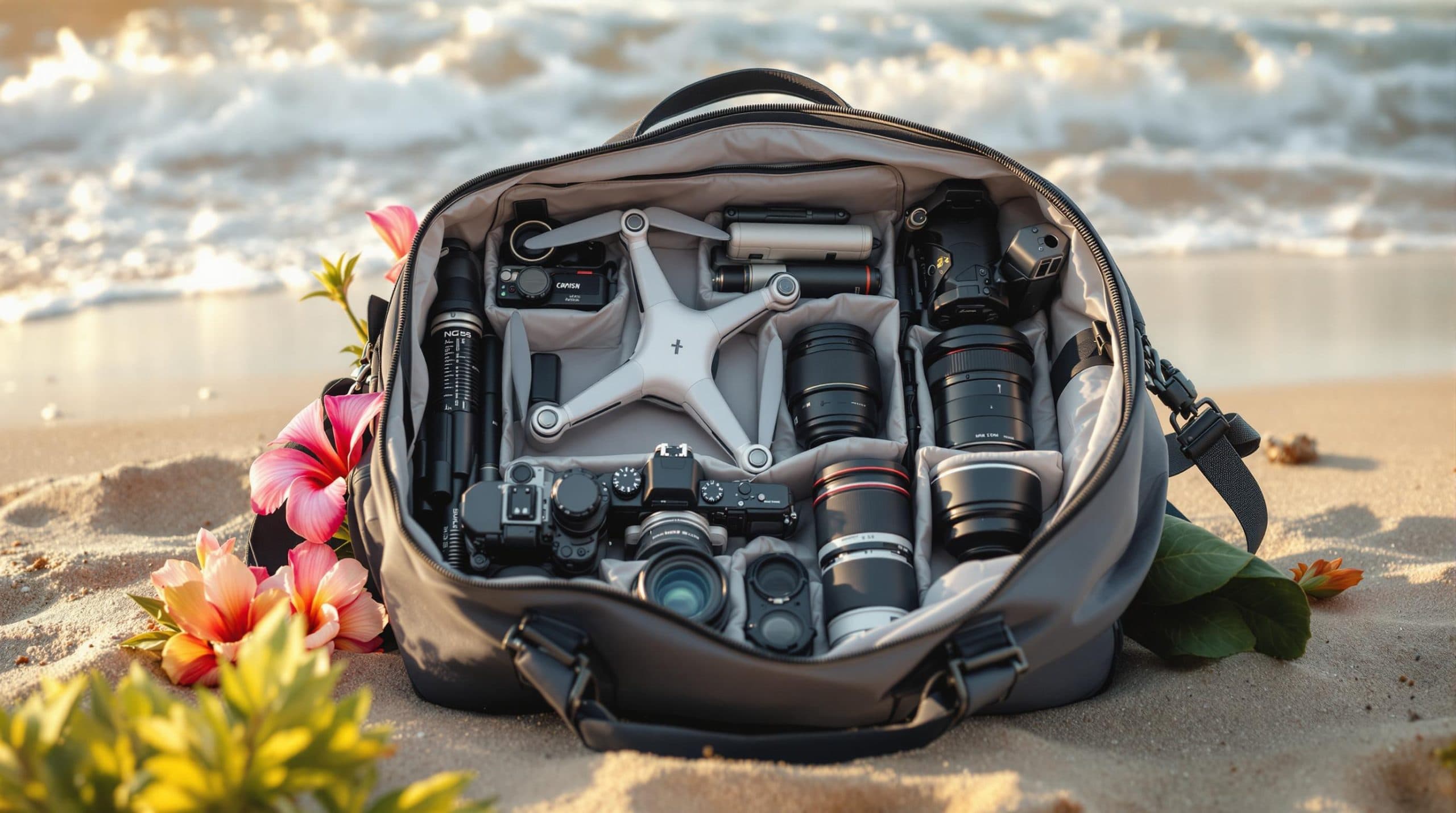
Allow time to move equipment and gather people. Review the destination wedding gear checklist alongside the shot plan so that equipment supports the agreed coverage.
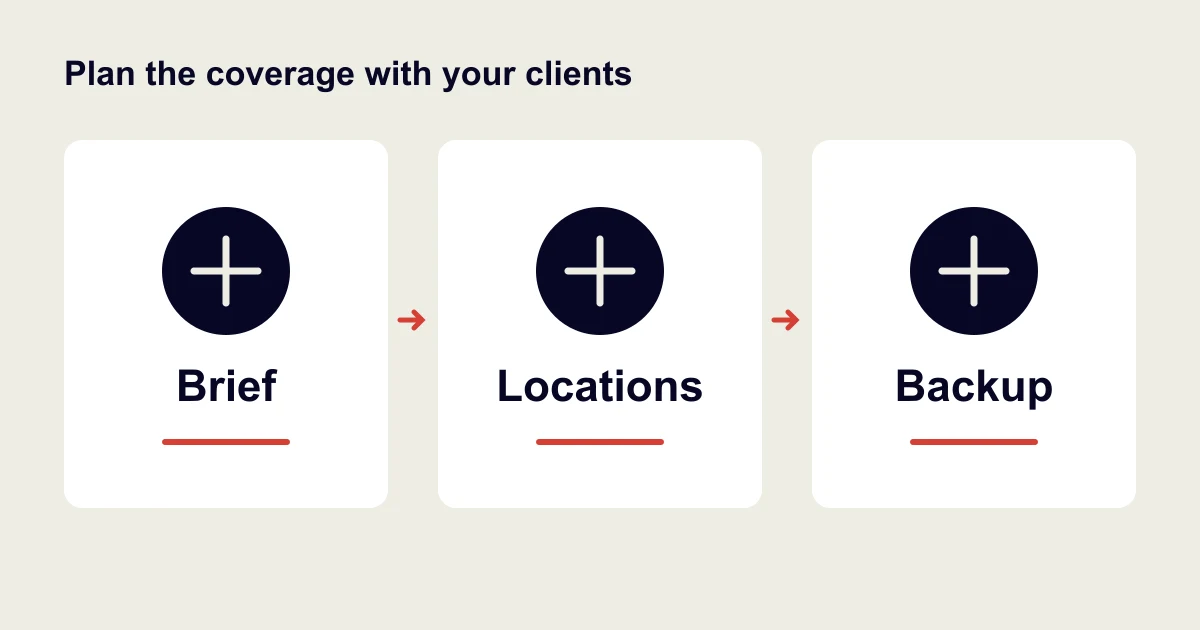
Use the agreed brief to choose workable locations and a backup for essential coverage. The illustration does not establish a particular venue’s permissions or report a study of photography preferences.
Agree on technology and delivery expectations
Describe deliverables plainly: the coverage period, editing approach, final formats, gallery access and expected delivery dates. If the couple requests vertical crops or early previews, agree on what is included and what those previews will contain.
Do not assume that a new tool makes a deadline achievable. Test your own workflow, including backups, review and export, before promising turnaround. Explain any material image alterations so the client understands what the finished photographs will represent.
Aerial coverage is an optional production decision. The operator must establish the applicable requirements and whether the venue and conditions permit the intended work. Keep a ground-based plan so an unavailable aerial shot does not become a missing essential image. The drone coverage planning guide offers related production questions; confirm current rules for the actual location separately.
Separate delivery from permission to promote
Client access to photographs does not by itself establish a hotel’s or planner’s right to reuse them in marketing. The US Copyright Office’s Photography and Copyright guidance explains that photographers generally own copyright in their photographs. Credit, a social tag or finding a photograph online does not replace appropriate permission.
Confirm the rights-holder agreement, intended channels and any relevant client or guest permissions before promotional use. Privacy, likeness and contract questions require separate attention; the copyright guidance does not settle every issue.
If a venue wants images later, plan that request separately from the couple’s coverage. Keep a record of which assets may be used, for what purpose and with what credit. The guest-content workflow guide discusses organizing permitted assets.
Finish the brief with one shared timeline, named contacts and a clear change process. Hotels integrating photography into a wedding offer can use the hotel wedding marketing guide and hotel resources to connect that offer with a clear inquiry process.
Editorial note: LOVU Travel publishes this photography-planning guide. It is editorial guidance, not an original photography market study. Contact the team to report a correction.