Want to capture stunning drone footage for destination weddings? Here’s a quick guide to help you get it right:
- Scout the Venue: Check for hazards (trees, power lines) and plan creative aerial shots using satellite imagery.
- Follow Drone Laws: Research local regulations, secure permits, and confirm venue policies.
- Plan Your Shots: Create a detailed shot list for key moments like vows, entrances, and dances.
- Practice Drone Moves: Master basic techniques like orbits, reveals, and tracking shots.
- Time for Best Light: Shoot during golden hours (sunrise/sunset) for soft, flattering light.
- Coordinate with Vendors: Work with planners and photographers to avoid disruptions.
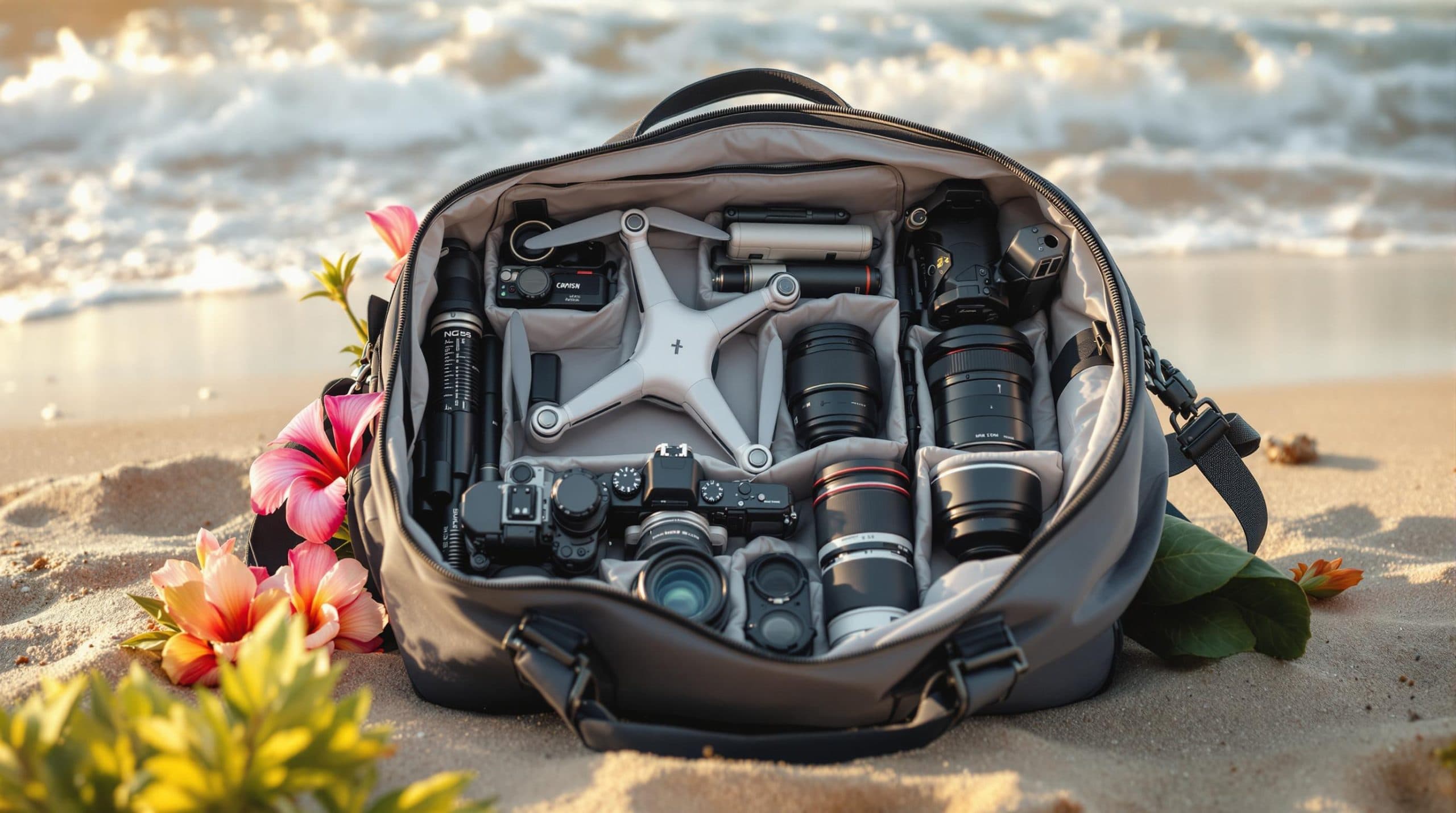
- Pack Backup Gear: Bring extra batteries, propellers, and protective cases for emergencies.
- Choose the Right Drone: Match the drone to the venue’s size and layout.
- Prioritize Safety: Minimize noise, avoid strong winds, and keep a safe distance from guests.
- Edit Like a Pro: Use color correction, stabilization, and smooth transitions for polished results.
Pro Tip: Always prioritize safety and respect local customs. By combining preparation, technical skill, and collaboration, you can create unforgettable wedding footage.
12 TIPS ON USING DRONES AT WEDDINGS
1. Check the Location First
Before capturing aerial footage, take a close look at the venue. Ensuring safety while planning creative shots is key to achieving stunning results.
Safety Assessment
Be on the lookout for potential hazards overhead. Common risks include:
- Power lines and utility poles
- Tall trees or overhanging branches
- Building structures or temporary setups
- Cell towers or radio antennas
- Event features like tents, arches, or lighting installations
Once you’ve addressed safety concerns, you can shift your focus to finding the best spots for breathtaking shots.
Strategic Vantage Points
Look for areas that naturally provide impressive aerial views. For example:
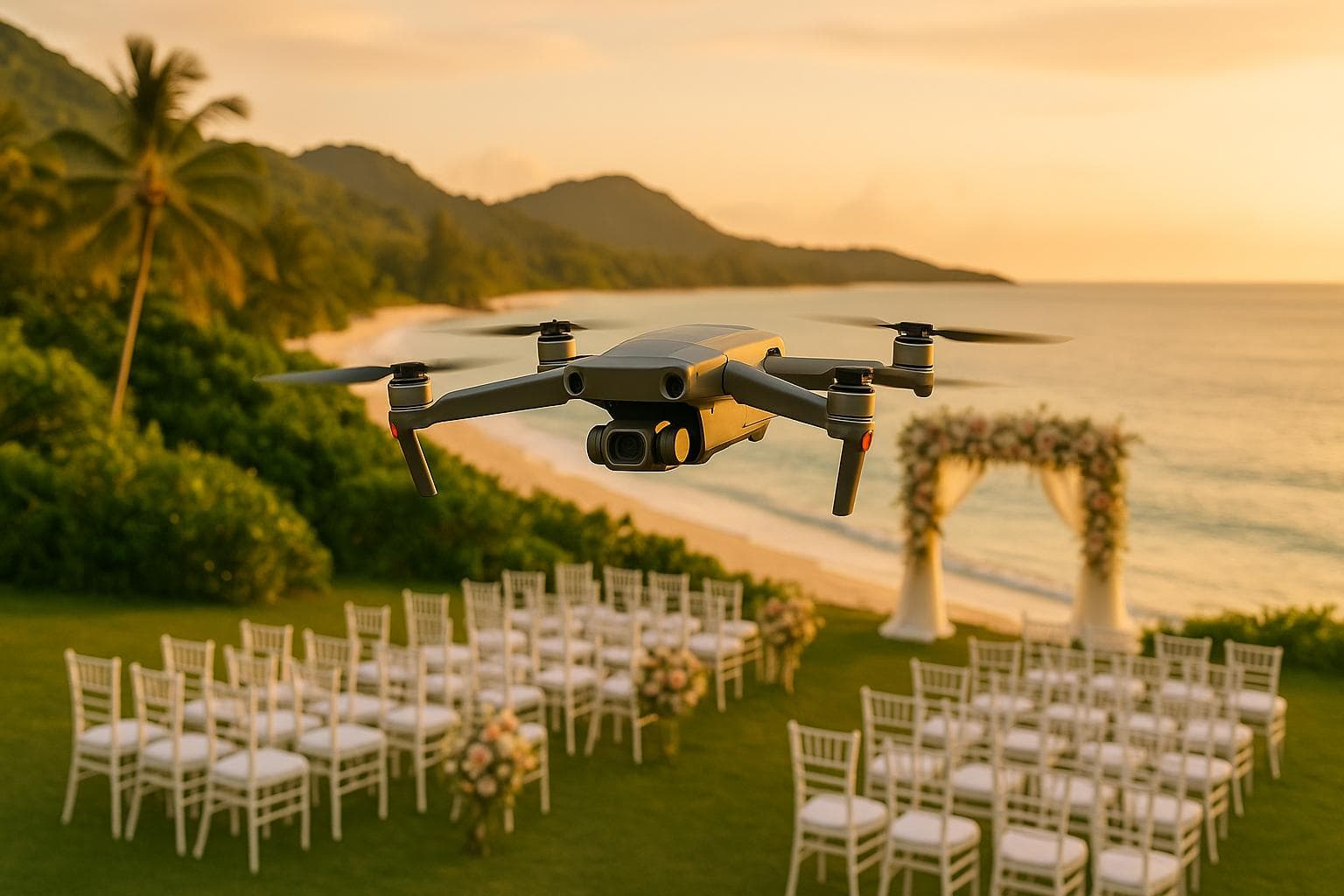
- A beachfront ceremony with a glowing sunset backdrop
- Venues with striking architectural elements
- Locations featuring private plunge pools or other standout features
Pre-Flight Planning
Use satellite imagery to double-check your observations and uncover any hidden obstacles that might not be obvious during an on-site inspection.
Weather and Wind Conditions
Always check the wind and weather forecasts before taking off to ensure a smooth and safe flight.
2. Know Drone Laws and Rules
Drone rules can differ widely depending on where you’re operating. Make sure to get all necessary permits and adhere to local regulations before starting any filming.
Federal Aviation Administration (FAA) Requirements

For U.S. commercial operations, review the FAA’s Part 107 guidance, including pilot certification, aircraft registration and any operational authorization required for your flight. Check Remote ID requirements too. Venue permission does not replace aviation approval or establish that a flight over guests is allowed.
Location-Specific Considerations
Check for local restrictions, especially in sensitive areas like airports, national parks, military zones, or areas with temporary flight restrictions.
Venue Guidelines
Reach out to the venue management ahead of time to confirm their drone policies and secure any required approvals.
International Regulations
Planning to film abroad? Research the drone laws in your destination country and ensure you have the necessary permits.
Documentation Checklist
Documentation Type Purpose
Pilot Certification Verifies operator training
Drone Registration Ensures FAA compliance
Venue Permission Confirms venue approval
Local Permits Meets local legal standards
Once you’ve handled all the legal details, you can shift your attention to planning your shot list and capturing the footage you need.
3. Make a Shot List
Create a shot list with the couple and venue team. Separate desired images from flights the operator can legally and safely perform; plan ground-camera alternatives for restricted or crowded moments.
Key Aerial Shots to Consider
Timing Shot Type Technical Details
Pre-ceremony Venue Overview 50 ft altitude, slow ascent
Ceremony Start Bridal Party Entrance 20 ft height, tracking shot
Post-vows Group Formation 75 ft elevation, spiral pattern
Reception Dance Floor Coverage 30–40 ft, LED-lit conditions
Organizing Your Shot Sequence
Work closely with the couple to identify 3–5 essential moments that showcase the destination’s beauty. Be sure to plan your sequence around any time limitations to ensure smooth execution.
Managing Time Effectively
Keep the shot list manageable and plan around tested battery performance, conditions and the aircraft’s manufacturer guidance. Leave an appropriate reserve rather than treating an advertised maximum flight time as usable filming time.
Respecting Local Customs
Ask the couple, venue and relevant local authority about cultural expectations, protected places and photography restrictions. Do not assume that an aerial shot is welcome or permitted because a ground-level photograph is allowed.
Preparing for the Unexpected
Mark your shots as “critical” or “nice-to-have” to ensure you prioritize the most important moments. This approach is especially useful in crowded or unpredictable settings, where alternative angles may save the day.
4. Practice Basic Drone Moves
Practice unfamiliar movements in a permitted training location before a wedding assignment. An orbit, reveal or tracking movement is a creative option, not a requirement to fly near guests.
Choose a movement that fits the site
| Desired image | Planning question |
|---|---|
| Venue overview | Is there an authorized location with clear separation from people and obstacles? |
| Landscape reveal | Can the operator maintain required visibility and a suitable flight path? |
| Couple portrait | Can the scene be staged without an unsafe flight near the couple? |
| Moving sequence | Can it be performed within the applicable operating rules, with a ground-camera fallback? |
Test settings and stopping conditions
Test framing, exposure, stabilization and recording settings with the actual aircraft. Follow manufacturer limits and the operator’s flight assessment. No universal altitude, wind speed or gimbal setting makes a wedding flight safe. Stop if conditions or guest movements invalidate the plan.
Professional Development
Practice controlled movements in a suitable simulator or permitted training location before using them on a wedding assignment. Review the footage for consistent speed, framing and safe clearance; do not learn an unfamiliar maneuver over guests.
5. Time Flights for Best Light
Getting breathtaking aerial footage often comes down to timing. The “golden hour” - right after sunrise and just before sunset - offers soft, warm light that reduces harsh shadows and makes colors pop. This lighting creates a romantic, visually pleasing effect, ideal for capturing destination weddings.
To make the most of this, plan your drone flights around local sunrise and sunset times. Use weather forecasts to adjust your schedule if needed. Proper timing ensures your shots look their best and leave a lasting impression.
For videographers and travel providers, syncing drone shoots with the golden hour can elevate the venue’s atmosphere and add a polished touch to the final footage.
6. Work with Other Vendors
Capturing stunning drone footage at destination weddings depends on smooth collaboration with other wedding vendors. Clear communication and thoughtful scheduling help ensure you capture every key moment without interrupting the event.
Pre-event Communication
Start by discussing the event timeline with the wedding planner. Sharing your drone flight plans ahead of time allows you to pinpoint the best opportunities for filming important moments - like the ceremony or group photos - while staying in sync with the overall schedule.
Photographer Coordination
Work closely with the photographer to align your plans. Coordinating ensures your aerial shots complement their ground-level images, creating a complete visual story of the wedding from multiple perspectives.
Professional Etiquette
Remember, you’re part of a larger team working to create lasting memories. Be adaptable and ready to adjust your flight schedule based on feedback from other vendors to help keep the day running smoothly.
For those providing destination wedding services, strong collaboration with vendors not only improves the final product but also enhances your reputation. Romance travel platforms can connect you with reliable wedding professionals and showcase your services. Up next, make sure you’re prepared for any situation by carrying extra gear.
7. Pack Extra Equipment
Once you’ve coordinated with vendors, it’s time to make sure your setup is rock-solid by packing additional gear. For destination weddings, having dependable drone equipment is a must - especially in remote locations. A backup kit can save the day if something goes wrong.
Here’s what to pack:
Key Equipment:
- Extra batteries (high-resolution footage can drain them quickly)
- Replacement propellers
- Additional SD cards
- Backup controller
- Basic tool kit
- Lens cleaning supplies
Protective Gear:
- Waterproof case with custom foam inserts
- Moisture absorbers
- Protective lens filters
Power and Charging:
- Portable power bank
- International charging adapters
Adjust your gear to match the environment. For beach weddings, bring anti-glare filters and protection against salt exposure. For mountain locations, pack batteries designed for cold weather. Having the right backup gear for the venue’s conditions ensures everything runs smoothly.
8. Select the Right Drone
Choose a drone that fits the venue’s requirements. For smaller indoor spaces, go with a lightweight, agile model. For large outdoor areas, pick a drone that offers more range and stability. If the venue includes both open and enclosed spaces, opt for a drone that can adapt its flight path seamlessly to maintain smooth coverage. The right choice will help bring your wedding story to life.
Talk to the wedding venue coordinator to get a clear understanding of the venue’s layout. This way, you can choose a drone that complements the setting and handles the technical needs of the location while showcasing its unique charm.
9. Keep Safety First
Make sure your guests feel comfortable by minimizing drone noise during destination weddings. Controlling the noise ensures the ceremony and reception remain undisturbed.
Ways to Reduce Drone Noise:
- Use only manufacturer-approved equipment and operating procedures; discuss noise-sensitive moments with the venue and couple.
- Plan flight paths to keep drones at a safe distance from guests while still capturing great footage.
- Schedule drone flights during natural breaks when background noise is higher.
- Position drones downwind from the gathering to help diffuse sound.
Always review the venue’s noise restrictions before flying. These steps allow you to capture beautiful aerial views without interrupting the celebration. Also, don’t forget to have a backup kit ready to tackle any unexpected issues.
10. Edit Footage Well
Once you’ve captured stunning aerial footage, the real magic happens in the editing room. Polished edits can turn raw drone shots into breathtaking visuals that perfectly complement destination weddings.
Color Correction Basics
Start by ensuring a consistent color grade across all clips. Align color temperatures between indoor and outdoor scenes. Adjust exposure, contrast, and saturation to reflect the wedding’s tone and ambiance.
Stabilization Tips
Even with advanced drone gimbals, some footage may need extra stabilization. Use tools like a warp stabilizer in your editing software to smooth out any residual shakiness. Focus on:
- Shots with quick directional changes
- Clips affected by wind
- Long tracking shots
These adjustments help your drone footage blend seamlessly with the rest of the wedding video.
Seamless Transitions
Combine drone shots with ground-level footage through smooth transitions. Thoughtful transitions can elevate storytelling:
- Fades work well for scene changes
- Dissolves connect emotional moments
- Light leaks add a soft, romantic feel
- Film grain can help unify different types of footage
Pro Tip: Match your transitions to the wedding’s style. For a sleek, modern wedding, stick to clean cuts. For a vintage vibe, use softer transitions like light leaks or dissolves. Consistency in transitions helps tie the visuals together, enhancing the overall narrative.
Conclusion
Capturing destination weddings with drones requires thoughtful planning, technical skill, and strict safety measures. These factors are essential for producing stunning aerial footage that adds a unique touch to wedding films.
Prioritize Safety and Compliance: Following safety guidelines ensures the protection of equipment, maintains guest comfort, and upholds professional standards.
Focus on Technical Skills: Choosing the right equipment and mastering flight techniques are crucial for delivering cinematic-quality results.
Emphasize Collaboration: Working closely with other vendors ensures that aerial shots fit smoothly into the overall wedding story.
Discuss the intended shots, operating constraints and backup coverage with the couple and venue team before accepting the assignment. A clear plan matters more than a promise of aerial footage in every situation.
As technology advances, staying updated allows you to offer even more impressive aerial coverage. Combining creativity with technical expertise ensures you capture breathtaking moments that couples will cherish forever.
FAQs
What safety measures should be followed when using drones for destination wedding videography?
When using drones for destination wedding videography, safety is critical to ensure a smooth and enjoyable experience for everyone. Here are some essential precautions to follow:
- Check local regulations: Different countries and regions have specific rules for drone usage. Always research and comply with local laws, including permits and no-fly zones.
- Inspect your equipment: Before the event, thoroughly check your drone for any technical issues, such as battery health, propeller condition, and firmware updates.
- Maintain a safe distance: Keep the drone at a safe height and distance from people, especially during ceremonies or crowded moments, to avoid accidents.
- Monitor weather conditions: Avoid flying in strong winds, rain, or extreme temperatures, as these can affect the drone’s performance and stability.
By prioritizing safety, you can capture breathtaking footage while ensuring the well-being of guests and the success of the event.
How can I coordinate my drone footage with other wedding vendors, like photographers and planners?
To ensure your drone footage complements the work of other wedding vendors, communication is key. Start by discussing the timeline and shot list with the wedding planner and photographer. This helps avoid overlapping or interfering with their work while capturing essential moments from unique angles.
Additionally, share your planned drone routes and shooting locations ahead of time to ensure everyone is on the same page. Collaboration not only enhances the overall wedding experience but also ensures your footage integrates seamlessly with the couple’s final wedding album or video.
What should I consider when selecting a drone for filming at a wedding venue?
When choosing a drone for filming a wedding venue, it’s important to consider a few key factors. First, evaluate the venue’s size and layout - a larger, open area may require a drone with longer flight time and better range, while tighter spaces might need a smaller, more agile model. Check local regulations to ensure the drone complies with any restrictions, especially in areas like beaches, historic sites, or urban locations. Finally, consider camera quality and stabilization features to capture smooth, high-resolution footage that enhances the beauty of the venue and the event.