
A seasonal marketing calendar should tell the team what needs to be ready, who owns it and when to review the result. A list of holidays does not answer those questions, and the month guests travel is not necessarily the month they inquire.
For hotels promoting romance travel, begin with verified offers and a defined audience. Use the separate romance travel seasonality guide to establish suitable travel dates, local conditions and operating capacity. This guide turns those inputs into marketing work.
Key Takeaways
- Give every campaign separate travel and target inquiry windows.
- Work backward from your own planning history and production needs.
- Assign an owner to the offer, copy, images, channels and follow-up.
- Require relevant images and usage records before publishing.
- Review qualified inquiries separately from views and confirmed stays.
Choose the campaign’s offer and inquiry window
Define the occasion, source market, eligible travel dates and next action. A honeymoon package inquiry and a destination wedding venue request need different information and may follow different decision processes.
Use the business’s own inquiry-to-arrival and inquiry-to-decision records to select a target inquiry window. Segment where practical by occasion, source market and travel period. If that history is missing, label the timing as a test and review the assumption after enough decisions have resolved.
Avoid prescribing a global wedding season or a standard number of months to promote every trip. A Northern Hemisphere holiday theme may suit a particular source market while having little connection to the destination’s climate.
Give each calendar row an owner and a dependency
A campaign row should describe a deliverable someone can complete, not an aspiration such as “increase honeymoon interest.” Connect the content to the relevant offer and inquiry path.
Recommended fields include:
- Campaign name, occasion and source audience.
- Eligible travel dates and target inquiry window.
- Channel, page or asset to produce.
- Offer and supplier verification status.
- Image source, usage scope and outstanding production needs.
- Responsible owner, reviewer and due date.
- Publication status and live location when published.
- Inquiry destination, response owner and review date.
Keep planned, drafted, approved, published and retired states distinct. A date in a spreadsheet does not mean a post is scheduled in a publishing service or visible to readers.
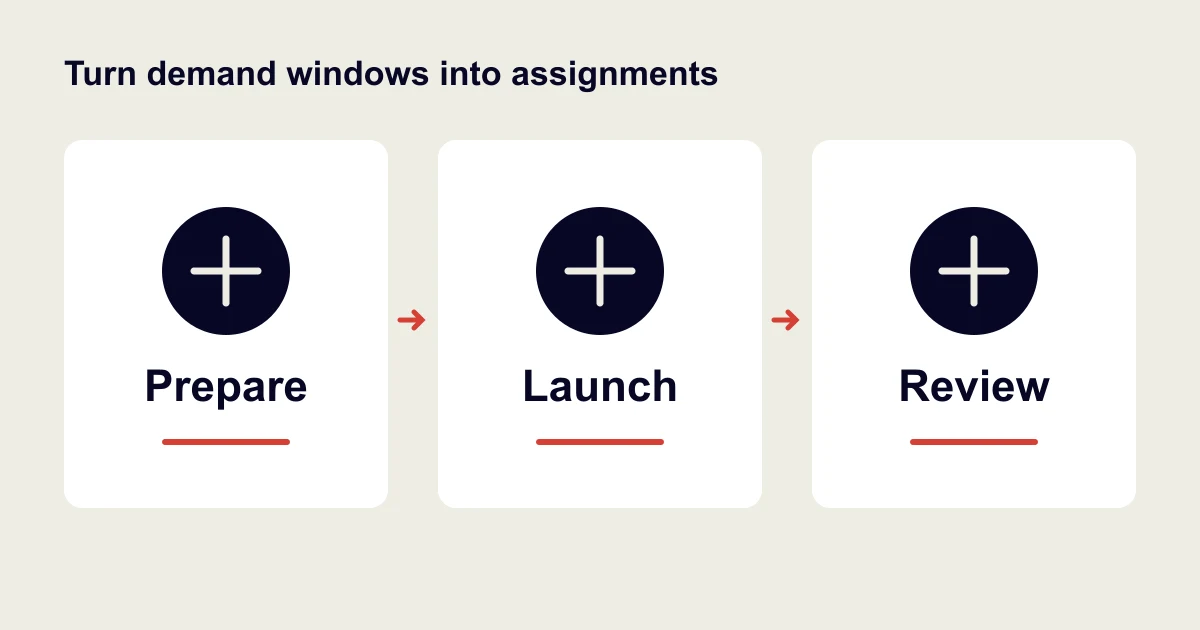
Work backward from publication readiness
Before setting a publishing date, confirm the information that must appear on the destination page: inclusions, exclusions, eligible dates, relevant conditions and how to inquire. Then allow time to produce and review the supporting material.
The following fictional example assumes a team has chosen a May inquiry test for a September stay in its own destination. The months are illustrative and are not a recommended worldwide campaign schedule.
| Example due date | Deliverable | Responsible function |
|---|---|---|
| April 1 | Confirm the September offer and supplier conditions. | Operations or product owner |
| April 8 | Draft the offer page and inquiry response information. | Content and sales |
| April 15 | Prepare relevant images, crops, captions and alternative text. | Design or content |
| April 22 | Review the page, links, terms and inquiry path. | Assigned reviewer |
| May 1 | Begin the selected channel test after approval. | Channel owner |
| June 1 | Review early inquiries and record decisions still pending. | Marketing and sales |
Actual due dates should reflect the team’s capacity, dependencies and observed customer planning intervals. An unresolved supplier question should move the campaign’s readiness state, not disappear from the calendar.
Plan images as part of each post
Give every proposed post an image brief alongside its text brief. Specify what the image needs to explain: a venue arrangement, a package inclusion, a local experience or a planning process.
For a longer guide, an explanatory inline image can make a checklist or workflow easier to understand. It should contribute useful information rather than repeat the hero photograph. Use a caption when the image needs context, and write alternative text describing meaningful visual content.
Record the image source and approved use. Check that a featured guest photo is cleared for the intended channel before including it. The guest content collection and permission workflow explains how to connect the photographer, intended use and approval record before publication. Keep illustrative diagrams identifiable as illustrations, and do not present them as actual property results or product screenshots.
Verify the final crop and readability on mobile. Essential prices, dates and conditions should remain available as page text rather than only inside an image.
Select channels the team can maintain
Match the channel to the decision. A detailed guide may support research, an email may explain an offer to an appropriate existing audience, and a social post may introduce one experience and link to its details.
Start with a manageable combination. Each additional channel creates work: format adaptations, captions, responses, link checks and reporting. Confirm that the inquiry owner can handle replies and questions during the campaign.
Use consistent campaign labels and destination links where tracking is available. Check that links point to the right offer rather than a generic page, and that an inquiry does not falsely appear to confirm availability or a reservation.
Review the work and the outcome separately
A production review checks whether the team delivered accurate copy, useful images, working links and a functioning inquiry path. A marketing review asks what happened after publication.
Record exposure and interaction measures separately from qualified inquiries, proposals and confirmed reservations. Include the inquiry source, requested travel period and decision status. A May inquiry about September travel can remain unresolved at an early June review.
Compare costs over a consistent period, including production and response work where relevant. Do not treat gross trip value as retained income or attribute every subsequent booking to a content interaction.
At the review date, decide whether to correct, continue, pause or retire the campaign. Update the page and channel materials when the offer ends or changes. Preserve the actual publication and review record so the next calendar builds on evidence rather than repeating an untested seasonal assumption.
Editorial note: Published by LOVU Travel. Contact us with questions or corrections. Examples identified as hypothetical are planning illustrations, not measured customer results.