
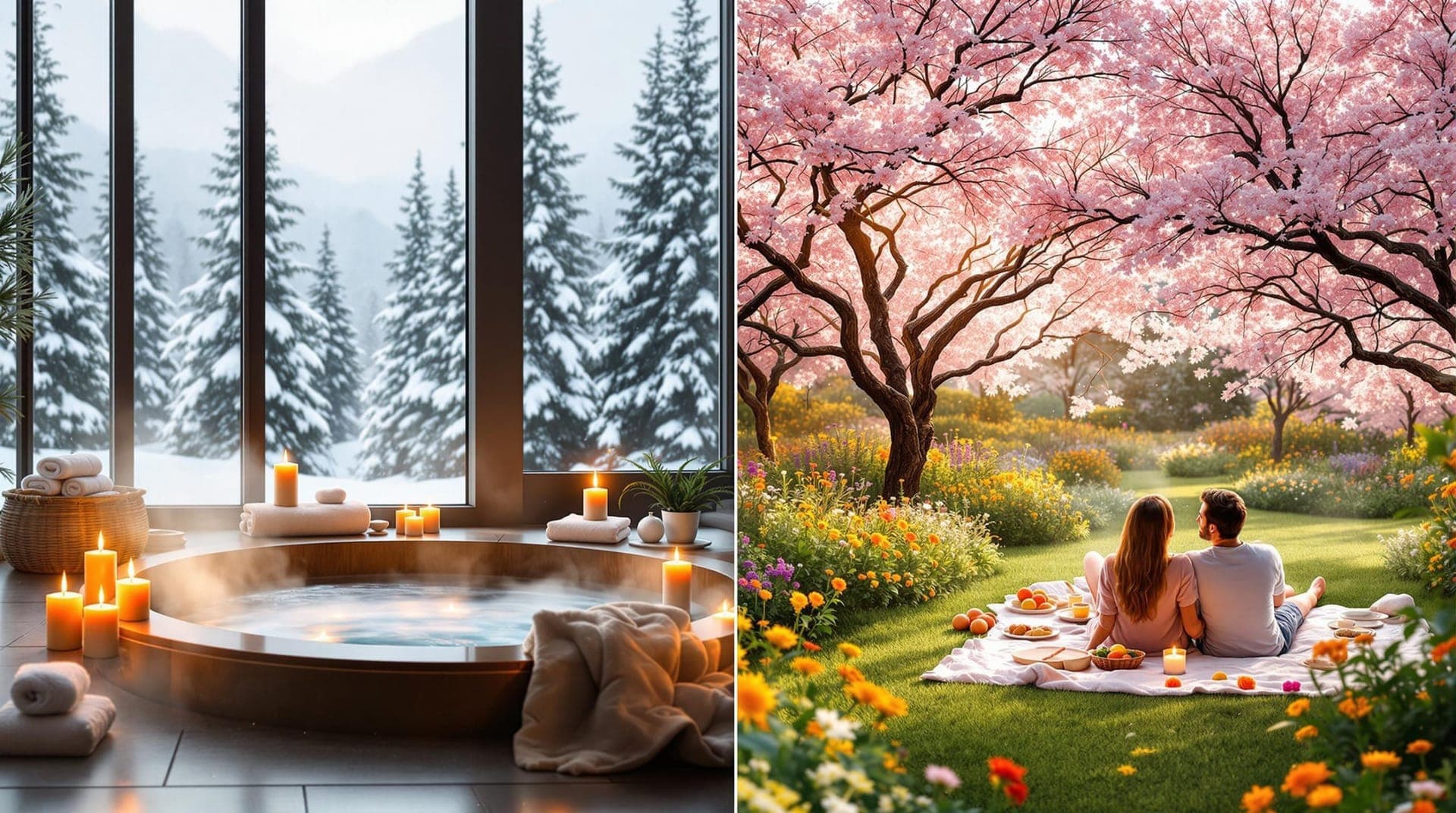
Romance travel in 2026 is defined by a convergence of forces that would have been hard to imagine even three years ago. Artificial intelligence is no longer a novelty add-on — it is becoming the backbone of how couples discover, plan, and experience romantic getaways. Sustainability has shifted from a marketing talking point to a booking filter. And the very definition of a “romantic trip” has expanded to include remote-work retreats, multi-generational celebrations, and micro-weddings on the other side of the world.
For hotels, travel advisors, DMOs, and wedding planners, understanding these shifts is not optional. The romance travel segment is growing faster than leisure travel overall, and the providers who adapt earliest will capture a disproportionate share of an increasingly lucrative market. This report breaks down the data, identifies the trends, and offers concrete guidance for professionals looking to stay ahead.
Platforms like LOVU Travel are already helping B2B providers connect with this evolving demand — but regardless of which tools you use, the strategic insights below apply across the industry.
1. Romance Travel Market Overview 2026
Market Size and Growth
The global romance travel market is projected to reach approximately $4.8 billion in 2026, up from an estimated $3.9 billion in 2025. The segment has sustained a compound annual growth rate (CAGR) of roughly 12.4% since 2022, outpacing the broader leisure travel market’s 7.8% CAGR over the same period.
Several structural tailwinds are driving this acceleration:
- Post-pandemic relationship milestones: The wave of postponed weddings from 2020-2022 continues to generate deferred honeymoon demand. An estimated 1.3 million couples globally are still taking “late honeymoons” in 2026 — trips originally planned for 2021 or 2022.
- Rising disposable income among Millennials and Gen Z: Millennials (now 30-44) are entering their peak earning and spending years. Gen Z couples (23-29) are increasingly prioritizing travel experiences over material goods, with 68% reporting they would rather spend on a memorable trip than a luxury item.
- Remote work enabling longer trips: The average duration of a romantic getaway has increased from 5.2 nights in 2023 to 7.1 nights in 2026, as remote-work flexibility allows couples to extend their stays.
Key Market Segments
The romance travel market breaks down into several overlapping segments, each with distinct growth trajectories:
| Segment | 2026 Estimated Value | YoY Growth | Notes |
|---|---|---|---|
| Honeymoons | $1.6B | +9.8% | Still the largest single segment |
| Destination Weddings | $1.1B | +14.2% | Fastest-growing major segment |
| Anniversary & Milestone Trips | $720M | +11.5% | Driven by 50+ demographic |
| Romantic Getaways (non-occasion) | $890M | +13.1% | Increasingly driven by Gen Z |
| Bleisure Romance | $490M | +22.7% | Newest and fastest-growing niche |
The “non-occasion” romantic getaway — trips that are not tied to a wedding, honeymoon, or anniversary — is a segment worth watching closely. It is growing rapidly among younger couples who view regular romantic travel as part of their lifestyle rather than a once-in-a-lifetime event.
2. Top Romance Travel Trends for 2026
AI-Powered Trip Personalization and Planning
Artificial intelligence has moved from the periphery to the center of romance travel planning. In 2026, an estimated 42% of couples use at least one AI-powered tool during their trip planning process, up from 27% in 2024.
The applications fall into three categories:
Itinerary generation. AI planning tools can now produce detailed, multi-day romantic itineraries in seconds — complete with restaurant recommendations matched to dietary preferences, activity suggestions based on shared interests, and timing optimized around local conditions (sunset times, crowd patterns, seasonal events). Platforms like Wonderplan, Roam Around, and specialized B2B solutions are competing aggressively in this space.
Dynamic personalization during the trip. Real-time AI concierges — accessible through hotel apps, messaging platforms, or voice assistants — can adjust recommendations on the fly. If a couple’s outdoor dinner is threatened by rain, the system can instantly suggest an equally romantic indoor alternative within walking distance, handling the reservation automatically.
Post-trip engagement. AI-driven email sequences and content personalization are helping providers keep couples engaged after they return home. Personalized anniversary reminders, curated “return trip” suggestions, and dynamically generated photo books are extending the customer lifecycle well beyond checkout.
For B2B providers, the implication is clear: properties and destinations that lack AI-powered personalization tools will increasingly feel dated to a generation of travelers who expect this level of service.
Sustainable Romance Tourism
Sustainability in romance travel has crossed a critical threshold. In 2026, 63% of couples say that a property’s environmental credentials influence their booking decision — up from 54% in 2024 and 41% in 2022. More importantly, 34% say they have actively rejected a property or destination because of sustainability concerns, a figure that was just 19% two years ago.
The specific areas where sustainability matters most to romance travelers:
- Carbon footprint of transportation (71%): Couples are increasingly choosing train routes over short-haul flights for European honeymoons. Rail bookings for romantic travel in Europe rose 38% year-over-year.
- Property environmental certifications (58%): Green Globe, EarthCheck, and LEED certifications are becoming table-stakes differentiators rather than premium extras.
- Locally sourced food and experiences (52%): Farm-to-table dining experiences at resorts saw a 44% increase in bookings compared to 2025.
- Waste reduction practices (47%): Single-use plastic elimination is now expected rather than celebrated.
Eco-weddings represent the fastest-growing subcategory of sustainable romance travel. The average eco-focused destination wedding in 2026 costs approximately $38,200 — roughly 8% less than a traditional destination wedding — because couples are opting for natural venues, local flowers, seasonal menus, and smaller guest lists. The cost savings, combined with the values alignment, make this trend self-reinforcing.
Carbon-neutral honeymoon packages are being offered by a growing number of resorts, typically bundling verified carbon offsets, electric airport transfers, and on-property renewable energy. Properties in Costa Rica, Norway, and New Zealand have been early leaders in this space, but the model is spreading rapidly to traditional honeymoon destinations in the Caribbean and Southeast Asia.
For a deeper look at sustainable romance marketing strategies, see our guide on Eco-Romance Marketing: Sustainable Getaways to Green-Minded Travelers.
Micro-Weddings and Intimate Celebrations
The micro-wedding trend that accelerated during the pandemic has not reversed — it has matured. In 2026, 31% of destination weddings have 30 or fewer guests, compared to 24% in 2023. The average destination wedding guest count has dropped from 42 in 2022 to 34 in 2026.
What is changing is the per-guest spend. Couples with smaller guest lists are investing more per person: the average per-guest expenditure at a micro destination wedding in 2026 is $1,420, compared to $980 for larger celebrations. This translates into higher-margin bookings for providers — fewer rooms to coordinate, but higher revenue per room.
Micro-weddings are also driving demand for non-traditional venues: private villas, boutique wine estates, restored historical properties, and even chartered yachts. Properties with flexible event spaces that can be configured for intimate gatherings of 10-40 people are seeing disproportionate demand growth.
The “minimony + grand honeymoon” model is gaining traction — a small, intimate ceremony followed by an extended, luxurious honeymoon. This model splits the budget roughly 40/60 between ceremony and honeymoon, compared to the traditional 70/30 split.
Experience-First Packages Over Luxury Amenities
The romance travel market is experiencing a fundamental shift in what couples consider “luxury.” Traditional markers — thread count, marble bathrooms, branded toiletries — are declining in importance relative to unique, shareable experiences.
Data from 2026 booking patterns reveals that the top five experience categories for romance travelers are:
- Private culinary experiences (cooking classes, chef’s table dinners, food market tours) — requested in 38% of romance bookings
- Cultural immersion (local artisan workshops, historical guided tours, language experiences) — 29%
- Adventure activities (snorkeling, hiking, hot air balloon rides, wildlife encounters) — 27%
- Wellness and spa (couples’ spa treatments, yoga retreats, meditation sessions) — 25%
- Sunset/sunrise exclusive access (private beach setups, rooftop dining, scenic viewpoint reservations) — 22%
The culinary tourism segment alone is projected to reach $5.1 billion by 2033, with romance travelers representing an increasingly significant share. Couples are booking food-focused romantic trips to destinations like Oaxaca, Emilia-Romagna, Chiang Mai, and the Basque Country — regions where the culinary experience is the primary draw, not an afterthought.
For hotels and resorts, the strategic takeaway is that investing in unique, bookable experiences may generate better returns than further room upgrades. A property with standard rooms but an exceptional sunset dinner program may outperform a competitor with renovated suites but generic dining.
Bleisure Romance: Remote Work Meets Romantic Getaway
The bleisure romance segment — where couples combine remote work with a romantic trip — is the fastest-growing niche in the market, expanding at 22.7% year-over-year. An estimated 490 million dollars will flow through this segment in 2026.
The typical bleisure romance trip lasts 10-14 nights, with couples working remotely during weekday mornings and exploring together in the afternoons and evenings. Weekends are fully dedicated to romantic activities. This model effectively doubles the trip length compared to a traditional romantic getaway, significantly increasing total spend.
What bleisure romance travelers need from providers:
- Reliable high-speed Wi-Fi (minimum 100 Mbps download) in rooms and common areas
- Dedicated workspace — either in-room desks with ergonomic chairs or co-working spaces on property
- Flexible meal timing — breakfast that extends past 10 AM, lunch available until 3 PM
- Mid-week experience options — shorter afternoon activities (2-3 hours) that complement a working schedule
- Extended-stay pricing — discounts for stays of 7+ nights that make the economics attractive
Destinations that are winning in this segment share common characteristics: favorable time zones relative to major work markets, strong digital infrastructure, moderate cost of living, and a high density of experiential activities. Lisbon, Bali, Tulum, Cape Town, and Tbilisi are all seeing significant bleisure romance inflows.
Multi-Generational Wedding Travel
Multi-generational wedding travel has grown into a segment that is too large to treat as an afterthought. In 2026, 47% of destination weddings include at least one guest aged 65+, and 38% include children under 12. Group bookings for 8+ people in the romance travel context have increased by 29% since 2024.
The challenge for providers is creating an experience that satisfies wildly different needs within a single booking: the couple wants romance and privacy, grandparents want comfort and accessibility, children need entertainment and safety, and everyone wants to feel included in meaningful shared moments.
All-inclusive resorts have a structural advantage here, but boutique properties are competing by offering “villa cluster” configurations — multiple adjacent accommodations sharing a common private space. This model gives each generation their own retreat while enabling easy gathering for shared meals and celebrations.
Properties and destinations that invest in accessibility (physical accessibility for elderly guests, dietary accommodation for multiple generations, activity options spanning all age groups and mobility levels) are seeing the strongest growth in multi-generational wedding bookings. This is an area where thoughtful planning and flexible infrastructure matter more than raw luxury.
3. Emerging Destinations to Watch in 2026
While the Maldives, Santorini, and Bali remain perennial favorites, several destinations are experiencing breakout growth in the romance travel segment:
Albania (especially the Albanian Riviera). Hotel development along the southern coast is accelerating, with boutique properties targeting the romance market specifically. Ksamil and Saranda offer Mediterranean beauty at roughly 40% lower price points than comparable Greek or Croatian destinations. Romance bookings to Albania grew 67% year-over-year.
Saudi Arabia. The Kingdom’s massive tourism investment — including NEOM, the Red Sea Project, and AlUla — is beginning to attract romance travelers. High-end resorts along the Red Sea coast are positioning themselves for the destination wedding market, offering unique desert-meets-ocean aesthetics that have no direct competitor globally.
Colombia (Cartagena and the Coffee Triangle). Cartagena has been on the radar for years, but the Coffee Triangle is emerging as a honeymoon destination in its own right. Boutique haciendas set in lush mountain landscapes, combined with culinary tourism and adventure activities, are drawing couples seeking something beyond the typical Caribbean beach honeymoon.
Slovenia. Lake Bled has long been a hidden gem, but Slovenia as a whole is gaining recognition for romantic travel. Its combination of Alpine scenery, Mediterranean coast, world-class wine regions, and a strong sustainability ethos (it was the first country to be declared a Green Destination) makes it exceptionally well-positioned for the eco-romance segment.
Oman. Luxury desert camps, pristine coastline, dramatic mountain scenery, and a reputation for safety and hospitality are driving rapid growth. Oman offers an alternative to the UAE for couples seeking Arabian luxury with more authenticity and fewer crowds.
Japan (beyond Tokyo and Kyoto). Secondary cities like Kanazawa, Takayama, and Naoshima are becoming romance travel destinations as couples seek more immersive, less crowded Japanese experiences. The weak yen has made Japan significantly more accessible, and romance-focused ryokan stays are being actively marketed to Western couples for the first time at scale.
For a curated list of emerging destinations with specific property recommendations, see our guide on Top Emerging Romance Destinations: Beyond Paris and Venice.
4. Technology Reshaping Romance Travel
AI Concierges and Virtual Assistants
The hotel AI concierge market has matured significantly in 2026. Properties using AI concierge systems report a 23% increase in ancillary revenue (spa bookings, excursion sales, dining reservations) compared to those relying solely on human concierge services. The key driver is availability — AI concierges handle requests at 2 AM just as effectively as at 2 PM, capturing impulse decisions that would otherwise be lost.
Leading implementations integrate with property management systems, local activity providers, and restaurant reservation platforms to offer end-to-end booking within a single conversation. For romance travelers specifically, AI concierges are being trained to recognize and respond to occasion-specific needs — automatically suggesting flower arrangements for an anniversary, recommending the most private table at the restaurant, or arranging a surprise experience based on a partner’s known preferences.
VR and AR Venue Tours
Virtual reality venue tours have become a standard part of the destination wedding sales process. Properties offering immersive VR tours of their wedding venues report conversion rates 2.4x higher than those relying on photos and video alone. The technology allows couples to “walk through” their ceremony and reception spaces, visualize different seating arrangements, and experience the venue at different times of day — all from their living room.
Augmented reality is finding its niche in the on-property experience. Several luxury resorts now offer AR-enhanced property tours that overlay historical information, local flora and fauna identification, and hidden experience recommendations onto the physical environment through a smartphone camera.
Smart Booking and Dynamic Pricing
Revenue management technology specifically designed for the romance segment is becoming more sophisticated. Smart booking engines can now identify romance-intent searches (based on date patterns, search terms, and browsing behavior) and dynamically adjust which packages and room types are displayed.
Dynamic pricing models tuned for romance travel are also accounting for “occasion urgency” — the recognition that a couple booking their honeymoon is significantly less price-sensitive than the same couple booking a casual weekend getaway. This allows properties to optimize yield without alienating price-conscious segments.
Integrated Planning Platforms
End-to-end romance travel planning platforms — which combine venue search, vendor coordination, guest management, and travel booking in a single interface — are reducing friction in the destination wedding and group romance travel booking process. These platforms are particularly valuable for travel advisors who specialize in romance travel, as they streamline what has traditionally been a highly manual coordination process.
5. What B2B Professionals Should Do Now
For Hotels and Resorts
Audit your romance package portfolio. If your packages have not been updated since 2024, they are likely misaligned with current demand. Ensure you offer at least: (1) an experience-first package emphasizing unique activities over room upgrades, (2) a sustainability-focused option with clear environmental credentials, and (3) an extended-stay bleisure romance package with workspace and flexible scheduling.
Invest in AI-powered personalization. At minimum, implement an AI concierge accessible through your property app or WhatsApp. At the advanced end, use AI to personalize pre-arrival communications, dynamically suggest experiences based on guest profiles, and automate post-stay engagement. Properties that are early to this will build a data advantage that compounds over time.
Create micro-wedding infrastructure. Designate at least one venue space that works beautifully for groups of 10-40. Develop an all-in-one micro-wedding package (venue, officiant, photographer, dinner, one night’s accommodation) at a clear price point. This is a high-margin segment that rewards properties willing to offer simplicity and flexibility.
Develop accessibility as a competitive advantage. Multi-generational bookings are growing fast, and accessibility is the primary constraint. Properties that invest in physical accessibility, dietary flexibility, and all-ages activity programming will capture this segment.
Visit LOVU for Hotels for tools and resources designed to help properties capture romance travel demand.
For Travel Advisors
Specialize and signal your expertise. Generalist advisors are losing ground to specialists in the romance segment. If you focus on romance travel, ensure your online presence, credentials, and content clearly communicate that specialization. Consider certifications from organizations like the Destination Wedding & Honeymoon Specialists Association.
Leverage AI tools to scale your practice. Use AI-powered itinerary generators and research tools to reduce the time spent on initial proposal development. This frees you to focus on the high-touch consultation and relationship-building that justify your fees.
Build destination wedding expertise in emerging markets. Couples are increasingly looking beyond traditional destinations. Advisors who can confidently plan weddings in Albania, Colombia, Slovenia, or Oman will face less competition and command higher margins than those operating solely in saturated markets.
Educate clients on bleisure romance. Many couples do not realize that combining remote work with a romantic trip is feasible and economical. Proactively presenting this option — with specific property recommendations that cater to the model — can significantly increase booking value.
Explore resources at LOVU for Travel Advisors to connect with romance-ready properties and streamline your planning workflow.
For DMOs and Destination Marketers
Lead with experiences, not landscapes. Every destination has beautiful scenery. What differentiates a destination for romance travelers in 2026 is the density and quality of bookable experiences — culinary, cultural, adventure, wellness. Invest your marketing budget in showcasing specific experiences rather than generic beauty shots.
Develop a sustainability narrative. Destinations with clear, credible sustainability stories are winning a growing share of eco-conscious romance travelers. This is not about greenwashing — it is about genuinely investing in sustainable tourism infrastructure and communicating that investment honestly.
Create content for the planning phase. Romance travelers spend an average of 4.7 months planning their trip. Destinations that provide rich, helpful content during this extended planning phase (venue guides, vendor directories, sample itineraries, seasonal calendars) capture mindshare and bookings.
Target multi-generational groups. A single destination wedding can generate 15-40 room-nights across multiple properties. DMOs that create infrastructure to support group romance travel — coordinated transportation, multi-property packages, group activity options — can capture outsized economic impact from each booking.
Learn more about destination marketing strategies at LOVU for Destinations.
6. Key Statistics and Data Points — 2026 Reference
This section consolidates the most important data points from this report for quick reference.
Market Size and Growth
- Global romance travel market: $4.8 billion (2026 estimated)
- Year-over-year growth: 12.4% CAGR (2022-2026)
- Broader leisure travel CAGR for comparison: 7.8%
- Bleisure romance segment growth: 22.7% YoY
- Destination wedding segment growth: 14.2% YoY
Consumer Behavior
- Couples using AI tools for trip planning: 42%
- Couples influenced by sustainability credentials: 63%
- Couples who have rejected a property for sustainability reasons: 34%
- Average romantic getaway duration: 7.1 nights (up from 5.2 in 2023)
- Average bleisure romance trip duration: 10-14 nights
- Average trip planning timeline: 4.7 months
- Gen Z couples preferring travel over luxury goods: 68%
Weddings and Honeymoons
- Destination weddings with 30 or fewer guests: 31%
- Average destination wedding guest count: 34 (down from 42 in 2022)
- Per-guest spend at micro destination weddings: $1,420
- Average eco-destination wedding cost: $38,200
- Destination weddings including guests 65+: 47%
- Destination weddings including children under 12: 38%
- Group bookings (8+ people) growth since 2024: +29%
Technology
- AI concierge impact on ancillary revenue: +23%
- VR venue tour conversion rate improvement: 2.4x
- Rail bookings for European romantic travel: +38% YoY
Top Experience Categories (% of romance bookings requesting)
- Private culinary experiences: 38%
- Cultural immersion: 29%
- Adventure activities: 27%
- Wellness and spa: 25%
- Sunset/sunrise exclusive access: 22%
Emerging Destinations — 2026 Growth Leaders
- Albania (Albanian Riviera): +67% YoY romance bookings
- Saudi Arabia (Red Sea coast): New market, significant investment pipeline
- Colombia (Coffee Triangle): Strong growth in boutique honeymoon stays
- Slovenia: Leading eco-romance positioning
- Oman: Luxury alternative to UAE gaining traction
- Japan (secondary cities): Benefiting from favorable exchange rates
Conclusion
The romance travel market in 2026 is larger, more diverse, and more technologically sophisticated than ever. The trends outlined in this report — AI-powered personalization, sustainable tourism, micro-weddings, experience-first design, bleisure romance, and multi-generational travel — are not passing fads. They reflect fundamental shifts in how couples approach relationships, work, and travel.
For B2B professionals, the message is straightforward: the providers who thrive will be those who treat romance travel as a specialized discipline requiring dedicated strategy, technology investment, and continuous adaptation. The days of adding a bottle of champagne to a standard room and calling it a “romance package” are definitively over.
The data is clear, the growth is real, and the opportunity is substantial. Whether you are a boutique hotel, a travel advisor, or a destination marketing organization, the time to invest in your romance travel strategy is now.
Destination marketers digging deeper should start with how DMOs can position their destination for romance tourism, the economic impact data behind destination weddings, and our guide to creating a destination wedding guide for your tourism website.