
CRM analytics can help a travel advisor identify unanswered inquiries, unclear next steps and differences between lead sources. Their value depends on consistent records and a decision you can take from the result. A dashboard alone does not demonstrate that software caused more bookings.
Start with a small set of definitions that the team uses consistently. If you are choosing a system, use the travel advisor CRM selection guide to check whether the records you need can be captured and exported.
Key Takeaways
- Define the inquiry, booking and time period before calculating conversion.
- Separate an automated acknowledgment from a meaningful human response.
- Compare retained commission or contribution with costs over the same period.
- Treat a change in results as something to investigate, not proof that a CRM caused it.
Define records so the numbers mean the same thing
Choose a unit for an inquiry. For example, one wedding opportunity may involve two partners and several messages, but it should not become a new sales opportunity every time somebody replies. Guest bookings can be linked to that event while remaining distinct reservations.
Record the inquiry’s creation date, source, assigned advisor, event or travel date, current stage and next action. Define a confirmed booking using the supplier documentation appropriate to the transaction. A manually changed CRM label alone is not that evidence.
Preserve unknowns. A missing source should stay “unknown” rather than being assigned to the channel you assume the couple used. If you change definitions, date the change so later comparisons remain interpretable.
Give each metric a denominator and a decision
A useful metric answers a specific operational question. Write down the inclusion rules before building a report.
| Metric | Working definition | Decision it can support |
|---|---|---|
| Human response time | Time from inquiry receipt to the first meaningful advisor response | Review staffing and unanswered inquiries |
| Consultation completion | Completed consultations divided by eligible inquiries in a defined cohort | Check scheduling and qualification steps |
| Inquiry-to-booking conversion | Eligible inquiry opportunities with at least one confirmed booking, divided by all eligible inquiry opportunities in the defined cohort | Investigate changes in lead quality or follow-up |
| Open inquiries without a next action | Eligible open records missing an owner or dated next step | Assign work and repair the process |
| Retained contribution | Retained commission and fees less the defined variable servicing costs | Compare commercial outcomes with acquisition and tool costs |
An automated receipt can be useful, but it should not count as a human response. State whether response time uses elapsed hours or business hours, then apply that choice consistently.
Count each opportunity once in both the numerator and denominator. In an illustrative cohort of ten eligible opportunities, if one wedding inquiry produces two confirmed room reservations, the opportunity conversion is 1 ÷ 10 = 10%. Report the two reservations separately; they do not turn one converted opportunity into two.
Google Analytics’ funnel-report documentation describes defining steps and conditions for users moving through a funnel, including the required sequence. That is a website analytics method, not the CRM opportunity calculation above. For your CRM report, document the entry rules, unit being counted and stage order just as explicitly.
Compare cohorts that have had time to develop
Bookings confirmed this month may originate from inquiries received much earlier. Dividing all this month’s bookings by this month’s inquiries mixes different groups.
For an illustrative analysis, select inquiry opportunities received in one month and follow those same records through a stated observation date. Report opportunities with a confirmed booking, lost opportunities and still-open opportunities. A recent cohort with many open inquiries needs more time before comparison with a mature cohort.
Segment only when there are enough records to make the comparison useful. Trip type, destination or source can provide a starting point. Keep the underlying counts visible: a percentage based on a handful of inquiries can move sharply when one record changes.
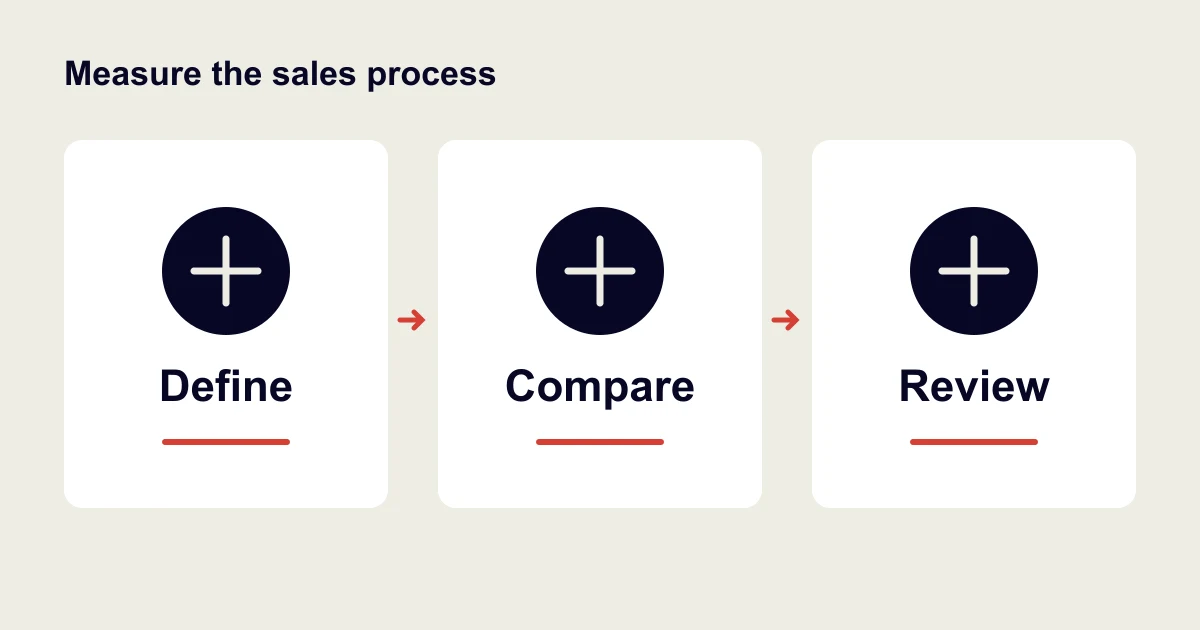
The three cards summarize defining the measure, comparing records and reviewing the result. They are a measurement guide, not a dashboard screenshot or evidence of an actual business result.
Use retained contribution in a hypothetical cost calculation
The following is a fictional 12-month scenario, not a measured result, vendor quote or forecast. It assumes two additional completed bookings during that same period; it does not establish that a CRM would produce them.
Each booking has a gross trip value of $20,000. In this example, the advisor retains $2,000 in commission per booking before servicing costs. Variable servicing costs are $600 per booking.
- Retained commission: 2 × $2,000 = $4,000.
- Variable servicing costs: 2 × $600 = $1,200.
- Contribution before the CRM investment: $4,000 − $1,200 = $2,800.
- All-in CRM investment for the same 12 months: $1,800, including subscription, setup and allocated staff time.
- Net scenario benefit: $2,800 − $1,800 = $1,000.
- Scenario return on that investment: $1,000 ÷ $1,800 = 55.6%, rounded.
The $40,000 in gross trip sales is not the advisor’s return. Actual evaluation must account for the commission retained, cancellations or reversals, servicing costs and when the income is realized. Keep the accounting basis consistent across periods.
This example also assumes the servicing cost and CRM staff-time cost cover different work. Counting the same labor twice would distort the result. Valuing saved hours as cash income would need its own evidence of how those hours produced a financial benefit.
Review one question and make one documented change
Suppose a report shows several inquiries with no next action. Review the records, assign owners and check whether the missing steps were completed at the next review. That is an actionable operating loop even before you can measure a booking outcome.
If a source’s conversion changes, inspect the inquiry mix, observation window, availability and follow-up before changing the marketing budget. Seasonality or a different supplier offer may explain the result. A before-and-after comparison can suggest a hypothesis without proving causation.
Use preferences that clients have actually shared when planning relevant follow-up, and check that the communication fits the relationship. The advisor email campaign guide covers message planning. Keep the CRM’s relationship records separate from package research and supplier confirmations.
For wider travel advisor resources, focus on the next decision the data can support. Consistent definitions and an honest cost model make that decision easier to assess.
Publisher: LOVU Travel Inc. About the publisher · Contact us about a correction.