
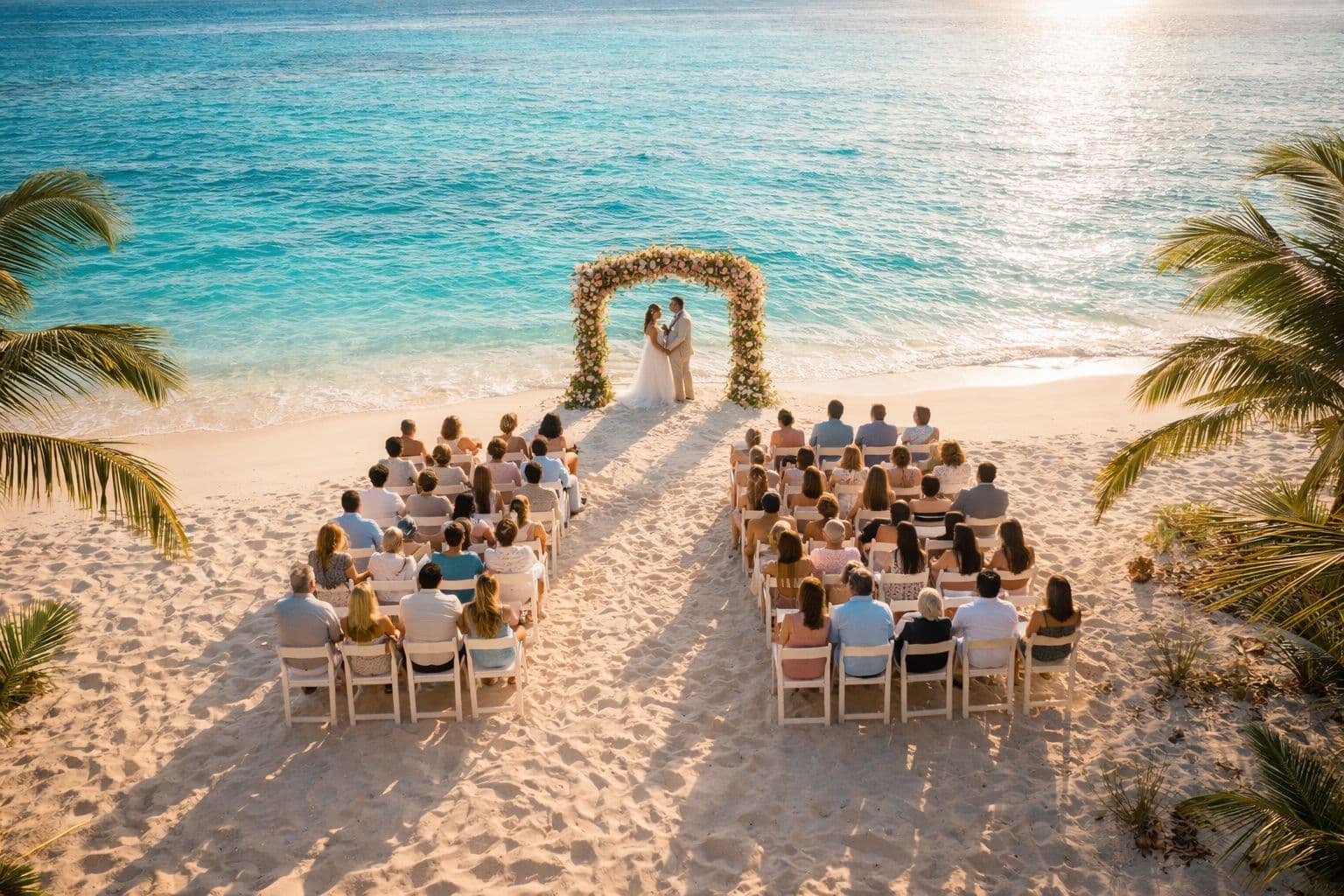
Destination weddings are not just ceremonies held in scenic locations. They are economic engines that generate revenue across entire tourism ecosystems — from hotels and restaurants to transportation providers and local artisans. Yet many destination marketing organizations struggle to quantify this impact, which makes it difficult to justify investment in romance tourism programs or to compete for government funding and political support.
This article breaks down the economic impact of destination weddings in concrete terms, providing DMO professionals with the data, frameworks, and case examples needed to build a compelling business case for romance tourism investment. Whether you are seeking to launch a new initiative or expand an existing program, understanding the financial mechanics of wedding tourism is essential. LOVU Travel’s destination solutions are designed to help DMOs capture more of this high-value market segment.
Destination Wedding Market Data
The Scale of the Opportunity
The global destination wedding market has grown steadily over the past decade, accelerating after the post-pandemic travel recovery. Current estimates place the market at approximately $25 billion to $30 billion annually, with projections suggesting it will surpass $37 billion by 2030.
Several structural trends are driving this growth:
- Shifting preferences: Younger couples increasingly prefer experiential celebrations over traditional hometown weddings. A 2024 survey by The Knot found that 25% of engaged couples considered a destination wedding, up from 18% a decade earlier.
- Smaller, higher-spend events: Destination weddings tend to have fewer guests (averaging 50 to 100) but significantly higher per-guest spending compared to local weddings.
- Elopement normalization: The rise of micro-weddings and elopements has lowered the barrier to destination celebrations, bringing couples who might not have considered a large destination wedding into the market.
- Social media influence: Platforms like Instagram, TikTok, and Pinterest have made aspirational destination weddings visible to a mass audience, creating demand in destinations that were previously off the radar.
Key Spending Figures
Understanding average spending patterns is critical for estimating economic impact:
| Category | Average Spend (USD) | Notes |
|---|---|---|
| Couple’s wedding costs | $30,000 - $50,000 | Venue, planner, vendors, decor, catering |
| Couple’s accommodation | $3,000 - $8,000 | Multi-night stay at host property |
| Couple’s incidental spending | $2,000 - $5,000 | Dining, activities, shopping, transportation |
| Per-guest accommodation | $1,500 - $4,000 | 2-5 night stay depending on destination |
| Per-guest incidental spending | $800 - $2,000 | Dining, activities, shopping, tours |
| Pre/post-wedding guest tourism | $500 - $1,500 | Extended stays for sightseeing |
When you multiply guest spending across the 50 to 100 guests attending an average destination wedding, the total economic injection from a single event ranges from $150,000 to $500,000 or more, depending on destination, guest count, and spending levels.
Direct Revenue: Accommodations, Venues, and Vendors
The most visible economic impact of destination weddings flows through direct spending with local businesses.
Accommodation Revenue
Accommodation is typically the single largest spending category for destination wedding guests. A wedding with 80 guests staying an average of three nights at $250 per night generates $60,000 in room revenue for the destination — from one event alone. This figure rises sharply in luxury destinations where nightly rates may exceed $500 to $1,000.
Key factors that influence accommodation revenue:
- Length of stay: Destination wedding guests stay 2 to 5 nights, with longer stays in more remote or experiential destinations
- Room block dynamics: Many couples negotiate group rates, which can reduce per-night revenue but guarantee higher occupancy. Properties often compensate with minimum spend requirements for food and beverage
- Spillover bookings: When the host property sells out its room block, guests book at nearby properties, spreading revenue across multiple accommodations
- Shoulder-season advantage: Destination weddings frequently occur in shoulder seasons when couples can secure better rates, meaning they fill rooms during periods of otherwise lower occupancy
Venue and Event Revenue
Venues hosting ceremonies and receptions generate substantial revenue through:
- Venue rental fees: Ranging from $2,000 for simple ceremony sites to $25,000 or more for exclusive-use estates and luxury properties
- Food and beverage minimums: Reception catering typically represents $150 to $400+ per guest
- Welcome events and farewell brunches: Most destination weddings include multiple group meals beyond the main reception
- Bar and beverage revenue: Open bars, wine pairings, and cocktail hours are standard at destination weddings
Vendor Revenue
Local wedding vendors form the backbone of the destination wedding economy:
- Wedding planners: $3,000 to $15,000+ per event for full-service destination wedding planning
- Photographers and videographers: $3,000 to $10,000 per event, often traveling from the couple’s home market but increasingly sourced locally
- Florists: $2,000 to $15,000+ depending on scale and style
- Musicians and DJs: $1,000 to $5,000 per event
- Hair and makeup artists: $500 to $2,000 for wedding party services
- Officiants: $300 to $1,500 per ceremony
- Rental companies: $2,000 to $10,000 for tables, chairs, linens, lighting, and decor
The vendor ecosystem creates a multiplier effect: a thriving destination wedding market supports full-time employment for dozens or hundreds of creative professionals in a community, many of whom are small business owners. For more on how individual venues and resorts can capitalize on the romance segment, see our complete guide to marketing your hotel as a wedding venue.
Indirect Revenue: Guest Tourism and Repeat Visitors
Beyond direct wedding-related spending, destination weddings generate significant indirect economic impact through guest tourism behavior and long-term repeat visitation.
Pre- and Post-Wedding Tourism
Destination wedding guests rarely fly to a location solely for a ceremony and fly home the next day. Research consistently shows that wedding guests extend their trips to explore the destination:
- 40% to 60% of wedding guests extend their stay by one to three additional days beyond the wedding events
- Extended-stay guests spend an average of $150 to $300 per day on activities, dining, shopping, and transportation
- Guests traveling with children often add family-friendly attractions and activities to their itineraries
- Couples within the guest group frequently treat the trip as a romantic getaway, booking spa treatments, fine dining, and couples’ experiences
For an 80-guest wedding where half the guests extend their stay by two days at $200 per day spending, the additional indirect economic impact is approximately $16,000 — from a single event.
The Repeat Visitor Effect
Perhaps the most undervalued economic impact of destination weddings is the repeat visitor phenomenon. When guests have a positive experience at a wedding destination, they form emotional associations with that place — the joy of the celebration, the beauty of the setting, the warmth of the hospitality. These associations drive future travel decisions.
Industry data suggests:
- 30% to 40% of destination wedding guests return to the destination within five years for leisure travel
- Couples who honeymoon in a destination show even higher return rates, with some studies indicating a 35% to 45% return-visit probability
- Anniversary travel: Couples often return to their wedding destination for milestone anniversaries (1st, 5th, 10th, 25th), creating a decades-long revenue stream
- Word-of-mouth referrals: Wedding guests who enjoyed the destination recommend it to friends, family, and colleagues, generating organic demand that is difficult to attribute but substantial in aggregate
The Lifetime Value Calculation
When DMOs calculate the economic impact of a single destination wedding, they should consider not just the immediate event spending but the lifetime value of every guest introduced to the destination:
Single Wedding Lifetime Value = Direct Event Spending + Guest Extended-Stay Spending + (Return Visit Probability x Average Trip Spend x Number of Guests) + Word-of-Mouth Referral Value
While precise quantification requires destination-specific data, the lifetime value of a single destination wedding easily reaches $300,000 to $1 million or more when repeat visits and referrals are factored in.
Case Examples: How Destinations Benefit
The Caribbean
The Caribbean region has long been the dominant destination wedding market in the Western Hemisphere. Jamaica alone hosts an estimated 5,000 to 6,000 destination weddings annually, contributing an estimated $400 million to $500 million in direct and indirect economic impact. The Jamaica Tourist Board has invested heavily in marketing the island as a wedding destination, including a streamlined marriage license process that allows couples to marry within 24 hours of arrival.
Key success factors:
- Simplified legal requirements for foreign marriages
- Resort infrastructure designed for weddings (dedicated coordinators, venue options, packages)
- Airlift from major North American cities
- Year-round warm weather
Mexico
Mexico’s Riviera Maya has emerged as the single most popular destination wedding location for North American couples. The region benefits from proximity to U.S. and Canadian source markets, competitive pricing compared to Caribbean islands, and a deep bench of experienced wedding vendors. The Mexican Tourism Board and regional DMOs have actively promoted wedding tourism through trade show participation, advisor FAM trips, and digital content campaigns.
Economic impact highlights:
- Riviera Maya destination weddings generate an estimated $1.5 billion to $2 billion annually when including guest spending
- Average wedding group size of 60 to 80 guests with 3 to 5 night stays
- All-inclusive resort model simplifies budgeting for couples and guests while guaranteeing high per-guest revenue for properties
The Mediterranean
Italy, Greece, and Spain have positioned themselves as premium destination wedding markets, attracting couples willing to spend significantly more for a European cultural experience. Santorini, the Amalfi Coast, and Tuscany have become iconic wedding destinations, commanding premium pricing and generating outsized economic impact relative to guest counts.
The Santorini model is instructive:
- The island hosts approximately 2,500 to 3,000 weddings annually
- Average wedding spend exceeds $40,000 (higher than Caribbean averages)
- Weddings contribute an estimated 15% to 20% of the island’s total tourism revenue
- The local government has implemented regulations (including noise restrictions and venue licensing) to manage the impact and maintain quality
How to Calculate Your Destination’s Wedding Tourism Impact
DMOs can build a reasonable estimate of wedding tourism economic impact using available data and structured assumptions.
Data Collection Framework
Step 1: Count wedding events. Sources include marriage license records (for legal ceremonies), venue reports, wedding planner surveys, and hotel booking data flagging wedding groups. Not all data sources capture every wedding, so triangulating multiple sources provides a more accurate count.
Step 2: Estimate average wedding size. Survey local wedding planners and venues to determine the average guest count for destination weddings in your market. Distinguish between full destination weddings (50-100+ guests), micro-weddings (10-30 guests), and elopements (2-10 guests), as spending profiles differ significantly.
Step 3: Calculate direct spending. Multiply the number of events by estimated average couple spend and average per-guest spend (using the figures in the tables above as starting benchmarks, adjusted for your destination’s price levels).
Step 4: Estimate indirect spending. Apply multipliers for guest extended stays and ancillary tourism spending.
Step 5: Model repeat visitation value. Apply conservative return-visit probabilities to guest counts and multiply by average trip value.
Sample Calculation
For a destination hosting 200 weddings per year with an average of 60 guests per wedding:
| Impact Category | Calculation | Estimated Value |
|---|---|---|
| Couple direct spending | 200 weddings x $35,000 | $7,000,000 |
| Guest accommodation | 200 x 60 guests x 3 nights x $200 | $7,200,000 |
| Guest incidental spending | 200 x 60 guests x $1,200 | $14,400,000 |
| Guest extended stays | 200 x 30 guests x 2 days x $200 | $2,400,000 |
| Total annual direct + indirect | $31,000,000 | |
| Repeat visits (Year 1-5) | 12,000 guests x 35% return x $2,000 | $8,400,000 |
| Total with lifetime value | $39,400,000 |
This framework can be refined with destination-specific data, but even conservative estimates typically reveal substantial economic impact that justifies DMO investment.
Building the Business Case for DMO Investment
Armed with economic impact data, DMO leaders can build a persuasive case for dedicating resources to romance tourism.
Arguments for Investment
- High ROI segment: Romance travelers deliver higher per-visitor revenue than almost any other leisure segment. Marketing dollars spent attracting wedding groups generate more economic return per dollar than general leisure marketing.
- Shoulder-season fill: Destination weddings often occur outside peak tourist season, generating revenue when it is most needed and smoothing seasonality.
- Community benefit distribution: Wedding spending flows to small businesses — florists, photographers, musicians, bakers — distributing economic benefits beyond large hotel chains.
- Competitive necessity: Competing destinations are actively investing in romance tourism marketing. Inaction risks losing market share to more aggressive competitors.
- Emotional branding: Romance tourism creates powerful emotional associations with your destination that benefit all segments of your tourism marketing, not just weddings.
Budget Allocation Considerations
A meaningful romance tourism program typically requires:
- Dedicated staff: At least one full-time position focused on romance tourism marketing and partner management
- Content creation: Budget for professional photography, videography, and written content production
- Trade show participation: Attendance at 2-3 romance travel trade events annually
- Digital marketing: Paid social, search, and content distribution budget
- FAM trips: Hosting 1-2 travel advisor or media familiarization trips per year
- Partner program administration: Resources for managing vendor directories, training programs, and partner communications
A reasonable starting budget for a mid-sized DMO launching a romance tourism program is $150,000 to $300,000 annually, with the expectation of scaling as the program demonstrates results.
Benchmarking Against Competing Destinations
Understanding how your destination compares to competitors is essential for positioning and goal-setting.
Benchmarking Framework
Evaluate competitors across these dimensions:
- Wedding volume: How many destination weddings do they host annually?
- Average wedding size and spend: What is the typical guest count and budget?
- Legal ease: How simple is the marriage process for foreign couples?
- Marketing investment: What level of marketing effort do they dedicate to romance tourism?
- Digital presence: How robust is their online romance and wedding content?
- Vendor ecosystem depth: How many experienced, specialized wedding vendors operate in the market?
- Airlift and accessibility: How easy is it for source-market couples and guests to reach the destination?
- Price competitiveness: How does total wedding cost compare to alternatives?
Competitive Response Strategies
Based on your benchmarking analysis, pursue one of three strategic approaches:
Head-to-head competition: If your destination matches or exceeds competitors on most dimensions, invest in marketing to capture share through superior content, advisor relationships, and brand building.
Niche differentiation: If you cannot compete on scale or price, identify a niche — eco-weddings, adventure elopements, cultural immersion ceremonies, LGBTQ±welcoming celebrations — and own that segment.
Infrastructure development: If gaps in your vendor ecosystem, legal framework, or venue inventory are holding you back, prioritize capacity building before scaling marketing investment. Partner with government agencies to simplify marriage regulations, invest in vendor training, and work with properties to develop wedding-ready infrastructure.
Turning Data Into Action
The economic case for destination wedding tourism is compelling across virtually every destination type. The key is translating data into action — securing organizational buy-in, dedicating resources, building partnerships, and executing a sustained marketing strategy.
DMOs that invest in understanding and communicating the economic impact of wedding tourism gain a significant advantage: the ability to attract government funding, justify marketing budgets, recruit and retain vendor partners, and position their destination authoritatively in a competitive market.
The numbers speak clearly. A single destination wedding can inject $150,000 to $500,000 into a local economy. Scaled across hundreds or thousands of events annually, the impact reaches into the hundreds of millions. For DMOs seeking high-value, resilient, emotionally resonant tourism segments, destination weddings deserve a seat at the strategy table.
To learn more about how LOVU Travel helps DMOs quantify and grow their romance tourism segment, explore our destination partnership opportunities.
Capturing this economic impact starts with owning the couple’s planning journey — LOVU Compass is the white-label platform DMOs use to do exactly that.